
Decoding Skincare Labels: 7 Terms Every South African Consumer Should Know
The skincare aisle is full of terms that sound regulated, scientific, and meaningful — and aren't always any of those. "Hypoallergenic" has no legal definition in South Africa. "Natural" means whatever the brand wants it to mean. "Dermatologist-tested" could refer to a single product trial with no negative outcomes or to thousands of clinical hours. The terms get used because they sell, not because they signal anything verifiable.
This post explains seven of the most common skincare label terms you'll see on SA shelves, what each one actually does (and doesn't) tell you, and what to look for when you want a real signal of product quality.
For the broader cluster on skincare for South African conditions, see our Skincare for SA Climates pillar.
1. "Hypoallergenic"
What people assume it means: "Won't cause allergic reactions."
What it actually means in SA: Nothing legally defined. The term is unregulated — any brand can use it on any product.
What to look for instead: A specific list of common allergens the product is free from (e.g., "fragrance-free, essential-oil-free, lanolin-free, formaldehyde-releaser-free"). Specific absences are verifiable; "hypoallergenic" is not.
Bottom line: Treat the word "hypoallergenic" as a marketing tone, not as evidence. The full ingredient list is what tells you whether your specific known triggers are absent.
2. "Dermatologist-tested" or "Dermatologist-recommended"
What people assume it means: "Tested rigorously by medical professionals and shown to be safe."
What it actually means: A dermatologist (somewhere, at some point, under some protocol) was involved in some testing of the product. The standard varies enormously:
- Could mean a single dermatologist conducted a small panel trial with 30 people for irritation only
- Could mean a single dermatologist was paid to "review" the formulation on paper
- Could mean a brand's in-house dermatologist signed off
- Could mean a robust multi-centre clinical trial — but this is rare for over-the-counter cosmetics
What to look for instead: Published clinical study data if the brand claims clinical results. Independent third-party testing. Ingredient transparency.
Bottom line: "Dermatologist-tested" is a low bar that most products clear. Treat it as basic table stakes for a cosmetic product, not as a quality signal.
3. "Fragrance-free" vs "Unscented"
These are not the same.
Fragrance-free: The product contains no added fragrance compounds. This is meaningful for sensitive-skin users because fragrance is one of the most common cosmetic allergens.
Unscented: The product has no perceptible scent — but it may contain masking fragrance compounds added specifically to neutralise the natural smell of other ingredients. "Unscented" products can still trigger fragrance allergies.
What to look for: "Fragrance-free" is the term to trust if you react to fragrance. "Unscented" tells you about the smell experience, not the ingredient list.
Bottom line: Sensitive-skin users should look for "fragrance-free" (or "parfum-free") on the ingredient list itself, not just the marketing copy. Check the full INCI list for "parfum," "fragrance," or specific essential oils.
4. "Natural" / "All-natural"
What people assume it means: "Made from plants, no synthetic chemicals."
What it actually means in SA: Almost nothing. The term is unregulated. "Natural" can be applied to products that contain:
- One natural-derived ingredient and twenty synthetic ones
- 100% natural ingredients (note: poison ivy is "natural" too — the term says nothing about safety)
- "Naturally-derived" synthetic compounds that started life as a plant but were industrially processed beyond recognition
- Anything the brand decides is "natural"
What to look for instead: Specific certifications (COSMOS Natural, NaTrue, Ecocert) that have defined standards. Ingredient lists you can read. Plant ingredients named specifically (e.g., "Aloe barbadensis Miller leaf juice" rather than "natural plant extract").
Bottom line: "Natural" on its own is a marketing word. A specific named plant ingredient with its Latin name is a real claim.
5. "Clean beauty" / "Clean formulation"
What people assume it means: "Free from harmful chemicals."
What it actually means: Nothing standardised. "Clean beauty" started as a movement against specific ingredients (parabens, phthalates, sulphates, silicones, certain preservatives) and has expanded to mean whatever individual brands want it to mean.
The problem with the term:
- It implies "non-clean" products are dirty or unsafe, which is mostly fearmongering. Many of the demonised ingredients (parabens, certain sulphates) have decades of safety data behind them.
- It usually doesn't actually mean "made from minimal ingredients" — clean-beauty products often have long ingredient lists.
- It doesn't engage with whether the alternatives are actually better (some "clean" preservative systems are less effective and risk microbial contamination).
What to look for instead: Specific exclusions ("paraben-free," "phthalate-free") if you have a reason to avoid them. A short, recognisable ingredient list. Concentration disclosures for active ingredients.
Bottom line: "Clean" is the most successful marketing term in modern beauty. It's also one of the emptiest. If a brand can't tell you what specifically is excluded and why, the word is decoration.
6. "Active ingredient" + percentage
What people assume it means: "This is the working ingredient, and the percentage tells me how strong it is."
What it actually means: Usually accurate, with caveats:
- Higher percentages aren't always better. Retinol at 1% is much harsher than retinol at 0.025% and isn't proportionally more effective for most skin types.
- Active ingredients depend on pH, formulation stability, and packaging. A "10% Vitamin C" serum in a clear bottle past its expiry date may be less active than a properly-formulated 5% version.
- Some "actives" need specific delivery systems (encapsulation, time-release) that the percentage alone doesn't disclose.
- A "natural" extract listed as 20% may have a much lower concentration of the actual active compound it contains.
What to look for: Reputable formulations from brands that disclose pH, packaging choices, and ideally have third-party testing or published efficacy data.
Bottom line: Percentages are useful information but not sufficient information. A well-formulated lower concentration often outperforms a poorly-formulated higher one.
7. "Non-comedogenic"
What people assume it means: "Won't clog pores."
What it actually means: The brand has used ingredients generally considered low-risk for pore-clogging. There's no standardised regulatory test for comedogenicity — the term is based on historical ingredient ratings (the "comedogenic scale" of 0-5) that come from rabbit-ear studies done in the 1970s and 80s.
The actual reality:
- What clogs your specific pores depends on your specific skin, not just the ingredient list
- Some "non-comedogenic" products contain ingredients that clog pores for some people
- Some products that aren't labelled non-comedogenic are perfectly fine for acne-prone skin
- The term is useful as a starting filter, not as a guarantee
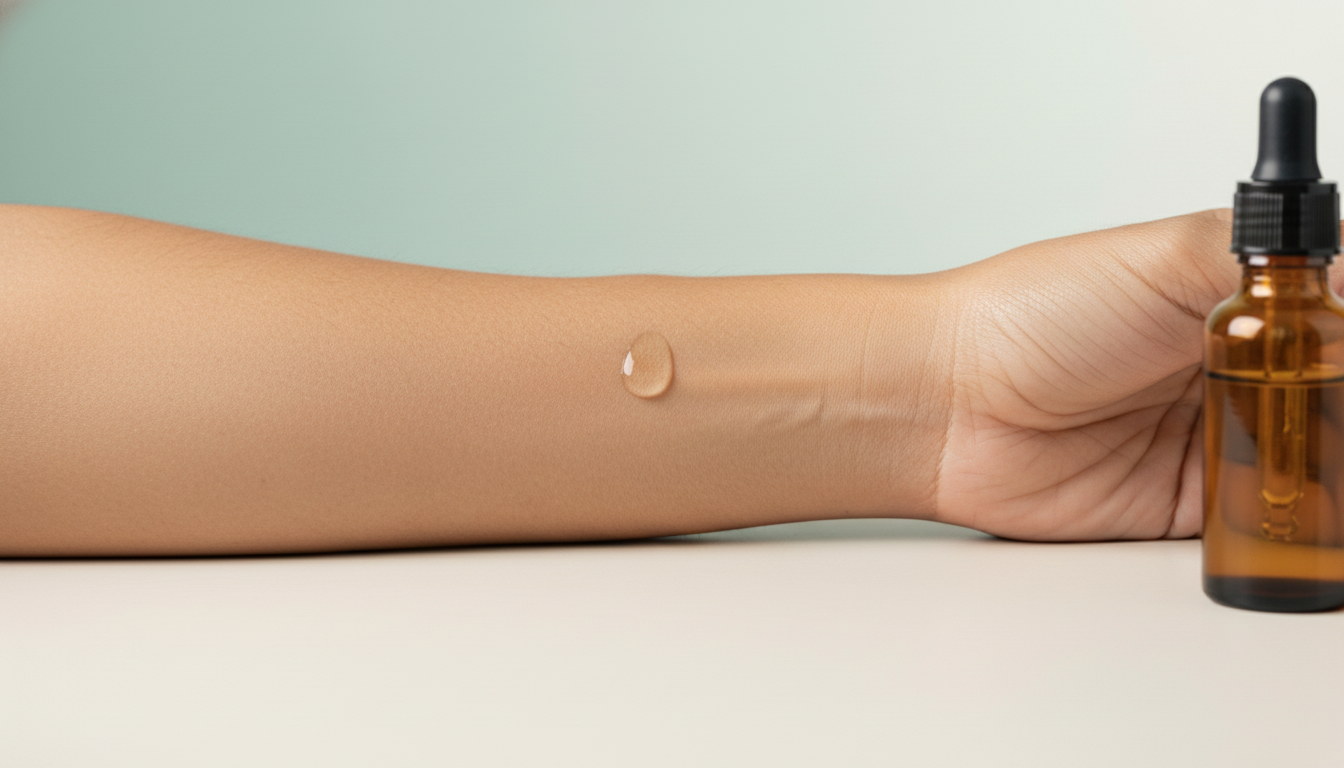
What to look for instead: Patch-test new products on a small area of your face (jawline or behind the ear) for 5-7 days before committing. We walk through proper patch testing in our patch-test guide.
Bottom line: "Non-comedogenic" is a useful broad filter for acne-prone skin but doesn't replace individual testing.
What good skincare labels actually look like
A label that genuinely respects the buyer will:
- Name ingredients in INCI format (the international nomenclature). E.g., "Aloe barbadensis Miller leaf juice" rather than "aloe extract."
- List ingredients in descending order of concentration (regulated; this is required, but many brands hide low-concentration "hero" ingredients in marketing while burying them at the end of the INCI list).
- Disclose active ingredient percentages for hero claims.
- Be specific about absences ("fragrance-free, essential-oil-free") rather than vague ("hypoallergenic").
- Avoid the unregulated marketing words ("clean," "natural," "pure," "magical") in favour of verifiable specifics.
- Disclose preservative system (e.g., "preserved with phenoxyethanol and ethylhexylglycerin at 1%") rather than just saying "preservatives."
Our Curaloe Soothing Aloe Gel lists its ingredients in INCI format with no hidden actives — the front-of-pack claims and the ingredient list match. That's the bar to look for, regardless of brand.
A 30-second label test
When picking up a new skincare product:
- Flip to the ingredient list. If you can't find it, that's already a flag.
- Look for marketing words in the first three lines (clean, natural, dermatologist-approved). The more marketing language, the less product information.
- Check the named ingredients. Are plant ingredients given Latin names, or vague extracts? Are active percentages disclosed?
- Look for explicit exclusions ("fragrance-free", "alcohol-free", "essential-oil-free") if you have known triggers.
- Check the preservative system. Is it disclosed? Does it look reasonable for the product type?
This filters out most marketing-led products in about 30 seconds.
Related reading
- Our men's 3-product aloe routine for a compressed simple routine
- Our summer skincare guide for city-specific advice
- Our patch-test post for how to introduce any new product
FAQ
What about "vegan" and "cruelty-free"?
"Vegan" (no animal-derived ingredients) and "cruelty-free" (not tested on animals) are two separate claims. Both are increasingly used and increasingly meaningful — there are recognised certification bodies for both (Leaping Bunny for cruelty-free; The Vegan Society for vegan). Look for the actual certification logo, not just the word.
Is "preservative-free" a good thing?
Generally no, for water-based products. Without preservatives, water-containing cosmetics grow bacteria and mould within days to weeks. "Preservative-free" products either need refrigeration, have very short shelf lives, or are anhydrous (oil/wax-based, where preservation is less critical).
What's the difference between "INCI" and "ingredient list"?
INCI (International Nomenclature of Cosmetic Ingredients) is the standardised naming system. A proper INCI list uses Latin names for plants and standardised names for chemicals. Marketing copy on the front of the bottle may use friendlier names, but the back-of-pack INCI list is the regulatory truth.
Are SA cosmetic regulations the same as the EU?
South African cosmetic regulation has historically been less strict than the EU but is gradually aligning. Most ingredients banned in the EU are still permitted in SA. If you want EU-grade regulatory backing, look for products that meet EU compliance (often stated on packaging).
What about "sulphate-free"?
A specific verifiable claim, usually referring to SLS/SLES in cleansers. Useful for people with sensitive scalps or colour-treated hair. Doesn't make a product better or worse overall — just lower-foaming and milder for some users.
Note: Curaloe products are topical cosmetics, not medicines. If you have a diagnosed skin condition or are using prescription topicals, please consult your dermatologist before adding new products. Information in this post is educational and not medical advice.
Related: Why Curaloe grows Aloe vera (Aloe barbadensis Miller), not Aloe ferox →

Leave a comment
This site is protected by hCaptcha and the hCaptcha Privacy Policy and Terms of Service apply.