
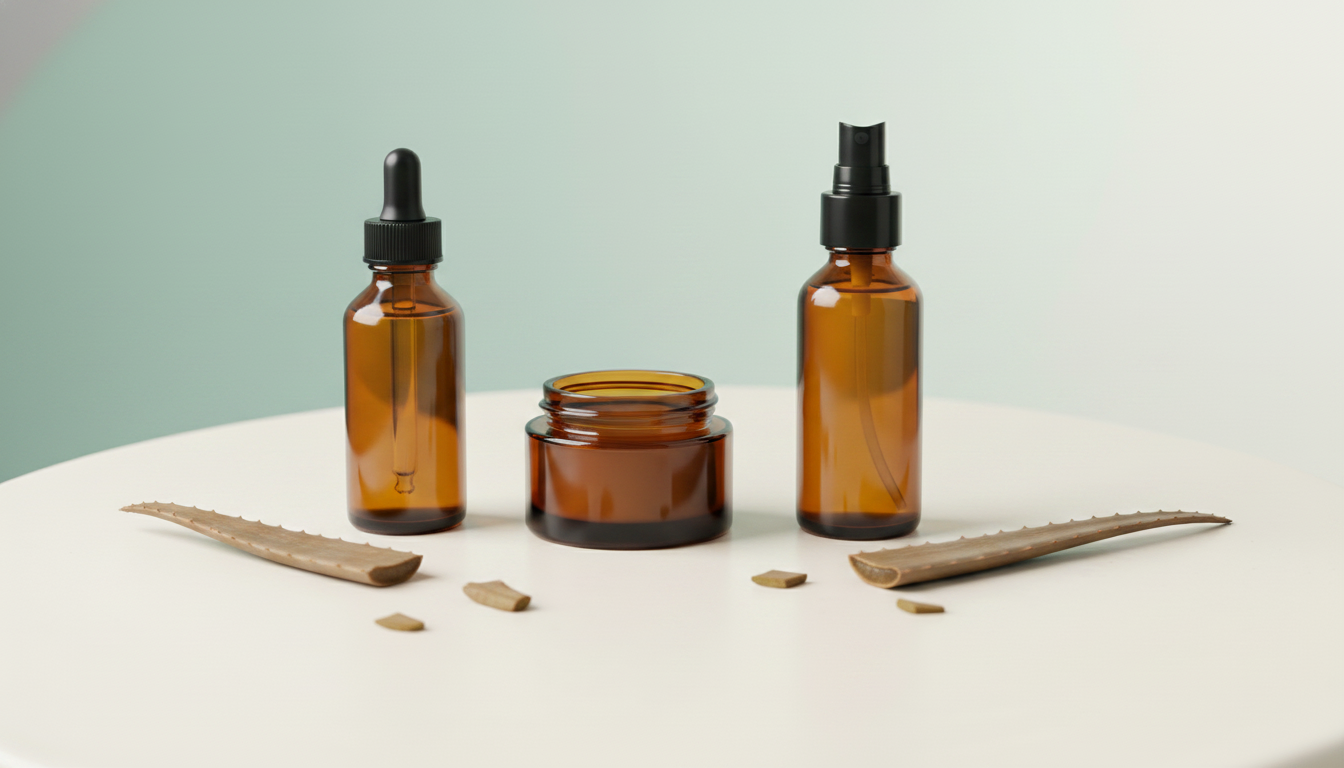
Skincare for South African Climates: The Aloe-Based Approach
There's no such thing as "South African skin" — and there's no single "South African skincare routine" that makes sense for everyone in the country.
A skincare regimen that works in humid Durban will leave a Bloemfontein winter user with flaking, taut skin. A heavy occlusive moisturiser that suits a Free State frost will trap sweat and clog pores in coastal Cape Town summer. UV exposure in the Limpopo at midday is roughly double the UV index of an overcast morning in KZN.
This guide breaks skincare advice down by South Africa's distinct climate zones, explains what each zone does to your skin barrier, and shows how single-species Aloe barbadensis Miller — the species we grow on our Limpopo plantation — fits into a climate-appropriate routine.
For the broader science of why Aloe barbadensis matters for skincare (vs. indigenous Aloe ferox or generic "aloe vera" blends), see our Aloe Barbadensis vs Aloe Ferox guide.
South Africa's six climate zones (and what they do to skin)
The South African Weather Service recognises six broad climate regions. Skin behaves differently in each.
1. Mediterranean (Western Cape coast)
Characteristics: Wet winters, dry summers, moderate temperatures year-round. Cape Town, Stellenbosch, Hermanus.
Skin effects:
- Winter: damp air + cold wind = barrier disruption, redness
- Summer: dry heat + strong UV = dehydration, sun damage
- Year-round: the wind itself (the famous Cape "Doctor") strips moisture continuously
Routine priorities: Barrier support in winter; UV protection + hydration in summer.
2. Subtropical Coastal (KZN coast)
Characteristics: Humid year-round, warm winters, hot summers. Durban, Umhlanga, South Coast.
Skin effects:
- High humidity = sebum can sit on skin, clogging pores
- Heat + sweat = bacterial growth, breakouts
- Cloud cover masks UV but doesn't block it (UVA in particular penetrates clouds)
Routine priorities: Lightweight, non-occlusive products; frequent gentle cleansing; UV protection even when overcast.
3. Highveld (Gauteng, Free State, parts of NW)
Characteristics: Cold dry winters, warm wet summers. Johannesburg, Pretoria, Bloemfontein. High altitude (1500m+).
Skin effects:
- Altitude = thinner atmosphere = more intense UV (sunburn faster)
- Winter dryness = severe dehydration, scaling, eczema flare-ups
- Summer thunderstorms = sudden humidity shifts the skin can't adapt to fast enough
Routine priorities: Heavy hydration year-round; barrier-supporting ingredients in winter; UV protection always (the altitude UV exposure is brutal).
4. Semi-arid (Limpopo, Northern Cape, parts of NW)
Characteristics: Hot dry days, cold dry nights, low humidity, intense sun. Upington, Kimberley, Beaufort West.
Skin effects:
- Wide diurnal temperature swing = skin barrier under constant adaptive stress
- Very low humidity = continuous transepidermal water loss
- Highest UV indexes in the country in summer
Routine priorities: Maximum hydration, layered occlusives at night, strict UV protection.
5. Subtropical (KZN inland, Limpopo, Mpumalanga lowveld)
Characteristics: Hot humid summers, mild dry winters. Polokwane, Nelspruit, Pietermaritzburg.
Skin effects:
- Summer: oily skin tendency intensifies
- Winter: still mild enough that barrier disruption is minimal
- Mosquitoes + skin reactions to insect repellents
Routine priorities: Oil control in summer; light hydration year-round; insect-bite soothing on demand.
6. Cold Interior (Drakensberg, parts of Limpopo highlands)
Characteristics: Frost in winter, mild summer. Underberg, Rhodes, Lady Grey.
Skin effects:
- Frost + wind chill = severe barrier disruption, chapping
- Indoor heating compounds dryness
- Outdoor activity culture = more UV exposure than the cold suggests
Routine priorities: Heavy occlusives in winter; barrier-supporting routines; UV protection during winter outdoor activity.
What good skincare actually does
Strip away the marketing and skincare does four things:
- Cleanse — remove dirt, sebum, makeup, environmental residue
- Hydrate — add water content to the stratum corneum
- Moisturise — seal hydration in with lipids
- Protect — block UV damage during the day
Everything else (serums, masks, exfoliators, treatments) is optional layering on top of these four functions. If your routine doesn't cover all four, it's incomplete regardless of what's on the labels.
Where Aloe Barbadensis fits
Aloe barbadensis Miller inner-leaf gel is a humectant — it draws and holds water in the upper layers of the skin. It's also rich in compounds (polysaccharides, vitamins C and E, amino acids, minerals) that are well-tolerated on most skin types.
Specifically, in a daily skincare routine, quality aloe gel can serve as:
- A hydration layer between cleansing and moisturising (especially in dry climates)
- A post-sun soothing layer (after UV exposure — not as a substitute for sunscreen during exposure)
- A lightweight summer moisturiser for humid coastal climates where heavier creams feel suffocating
- A spot soothing layer for irritated areas (wind chap, mild razor burn, etc.)
What it doesn't do (despite a lot of online claims):
- Cure acne, eczema, psoriasis, or any other dermatological condition
- "Anti-age" skin in a clinically meaningful way
- Replace medically-prescribed treatments
It's a quality skincare ingredient, not a miracle. Treated as such, it earns its place in most South African routines.
For the production side — why our gel is different from the gel in generic Aloe Vera products — see Why South African-Grown Aloe Matters and Cold-Pressed vs Reconstituted.
Routines by climate zone
Cape Mediterranean (summer)
Morning:
- Gentle gel cleanser (avoid foaming sulphate cleansers that strip the barrier)
- Aloe gel as a lightweight hydration layer
- Daily SPF 30+ moisturiser (the Cape sun is strong, the wind makes you forget)
Evening:
- Oil-based or balm cleanser (removes sunscreen properly)
- Gentle second cleanse if needed
- Aloe gel
- Light moisturiser
Cape Mediterranean (winter)
Morning:
- Cream cleanser
- Aloe gel
- Richer moisturiser with ceramides
- SPF 30+ (winter UV is lower but still meaningful)
Evening:
- Cream cleanser
- Aloe gel
- Occlusive night cream
Subtropical Coastal (KZN year-round)
Morning:
- Gentle foaming cleanser (your sebum production is high — gentle but cleansing)
- Aloe gel
- Lightweight gel moisturiser or aloe gel alone
- SPF 50 (humidity makes you forget, but the cloud-penetrating UVA is real)
Evening:
- Oil cleanser → foaming cleanser (double cleanse for sunscreen + sebum)
- Aloe gel
- Lightweight serum (niacinamide is well-tolerated)
Highveld (winter)
Morning:
- Cream cleanser (water alone if barrier is irritated)
- Hydrating toner or essence
- Aloe gel — generous layer (the dry winter air is your enemy)
- Heavy moisturiser with ceramides + occlusives
- SPF 30+ (altitude makes UV harsher than it feels)
Evening:
- Oil cleanser
- Aloe gel
- Repair-focused night cream
- Optional: facial oil to seal everything
Highveld (summer)
Move to lighter formulations; everything else stays.
Semi-arid (Limpopo / Northern Cape)
Year-round emphasis on layered hydration:
- Cream cleanser (foaming cleansers are too stripping here)
- Hydrating toner or thermal water spray
- Aloe gel
- Hyaluronic acid serum (if available)
- Heavy moisturiser
- SPF 50+ (UV is intense)
Night:
- Oil cleanser
- Aloe gel
- Heavy night cream
- Facial oil (seal everything in — overnight dehydration is severe)
Subtropical lowveld
Similar to coastal humid, with extra attention to oil control in summer.
Cold interior
Similar to Highveld winter year-round in winter months; standard hydration in mild summer.
A 3-step minimum routine (everyone, everywhere)
If skincare overwhelms you, the minimum viable routine for any South African climate is:
- Cleanse (gentle, twice daily)
- Aloe gel + moisturiser (twice daily — aloe for hydration, moisturiser to seal)
- SPF 30+ every morning (the single most impactful step for long-term skin health, regardless of where you live)
Three steps. Twice a day. Less than 5 minutes. Better than 10-step routines done inconsistently.
Common mistakes by climate
Cape Mediterranean
- Forgetting sunscreen on cloudy days — UVA penetrates clouds and ages skin
- Using a winter heavy cream in summer — leads to clogged pores
- Skipping moisturiser after gel cleanser — gel cleansers can leave skin tight; the aloe + moisturiser step matters
KZN
- Skipping moisturiser because "it's too humid" — humidity doesn't equal hydration; your skin still needs water
- Heavy occlusives in summer — traps sweat and bacteria
- Forgetting sunscreen because of cloud cover — KZN cloud cover doesn't block UV
Highveld winter
- Hot showers — they strip the skin barrier; lukewarm only
- Indoor heating without humidifier — air at 15% relative humidity dehydrates skin overnight
- Foaming cleansers — too stripping; switch to cream or oil cleansers Apr-Sep
Semi-arid
- Skimping on water intake — internal hydration shows up in skin within 48 hours of going under 2 L/day
- Wind exposure without protection — wind alone strips moisture as fast as direct sun
Reading product labels (climate-specific)
Different climates call for different ingredient priorities. A quick translator:
| You live in… | Look for | Avoid |
|---|---|---|
| Cape Mediterranean | Ceramides, niacinamide, lightweight aloe gel | Heavy mineral oils in summer |
| KZN | Lightweight gels, hyaluronic acid, salicylic acid (for oily skin) | Heavy occlusives, comedogenic oils |
| Highveld winter | Ceramides, glycerin, shea butter, aloe layered | Alcohol-based toners (strip barrier) |
| Semi-arid | Hyaluronic acid, glycerin, layered hydration | Foaming sulphate cleansers, exfoliating acids daily |
For a deeper guide to reading skincare labels, see Decoding Skincare Labels: 7 Terms Every SA Consumer Should Know.
Where Curaloe's skincare line fits
Our skincare range is built around the same single-species Aloe barbadensis Miller we grow for the juice — same plantation, same cold-processing principle, just formulated for topical application.
The core products:
- Soothing Aloe Vera Gel 150ml — high-concentration aloe gel for hydration layer, post-sun, spot soothing
- Aloe Vera Cream — moisturiser with aloe + barrier-supporting lipids
- Aloe Vera Serum — lightweight concentrate for problem areas
We don't make a separate product per climate — what we do is provide products that layer well so you can build the right routine for your zone.
For a starter combo, the Aloe Vera Gel + a climate-appropriate moisturiser covers the 3-step minimum. Add a sunscreen of your choice and you have a complete year-round routine.
For men specifically, our 3-product men's aloe skincare routine covers a no-fuss daily kit.
Frequently asked questions
Q: I have sensitive skin. Is aloe gel safe to try?
A: For most people, yes — aloe gel is among the better-tolerated skincare ingredients. But "most" isn't "all." Always patch-test a new product on the inside of your forearm for 48 hours before applying to your face. If you have a known Asphodelaceae allergy or a history of cosmetic reactions, talk to a dermatologist first.
Q: Can I use aloe gel as my only skincare?
A: As a hydration layer, yes — but aloe gel alone isn't a complete routine. You still need a cleanser, a moisturiser to seal in the hydration, and (most importantly) daily sunscreen.
Q: Does aloe gel replace sunscreen?
A: No. Aloe gel has no meaningful SPF. It can soothe skin after sun exposure, but it does not protect during exposure. Use a dedicated SPF 30+ daily.
Q: I'm in Joburg in winter and my face is constantly tight and flaky. What changes?
A: Three steps: (1) switch cleanser from foaming to cream or oil, (2) add a heavier moisturiser with ceramides, (3) consider running a humidifier overnight. The aloe gel layer between cleanser and moisturiser is also more impactful in dry conditions than humid ones.
Q: Can I use aloe gel on my body too?
A: Yes. For sunburn relief, post-shave irritation, dry patches, mosquito bites — body skin tolerates aloe gel as well as facial skin does. The 150ml bottle is sized for facial use primarily; for whole-body application a larger format would be more cost-effective (currently in our product roadmap).
Q: How often should I exfoliate in a SA climate?
A: Most SA climates are drying enough that aggressive exfoliation (more than 1-2x/week) damages the barrier. Once a week with a gentle chemical exfoliant (mild AHA or BHA) is plenty for most people. Always follow with extra hydration (aloe gel works well here) and resume your usual routine.
Q: Does the climate where Curaloe grows aloe affect the final product?
A: Yes. Plants grown in subtropical Limpopo bushveld (with wide diurnal temperature swings and moderate water) produce thicker, more polysaccharide-rich inner-leaf gel than aloe grown in tropical humid conditions. The growing climate is part of why we farm where we do. See the Curaloe origin story for the full agricultural reasoning.
The short version
South Africa isn't one climate. Build a routine for your climate, not for "South Africa" generally.
The 3-step minimum (cleanse → hydrate + moisturise → SPF) works everywhere. Layer aloe gel as a hydration step; adjust the cleanser and moisturiser weight based on your climate. Sunscreen is non-negotiable regardless of where you live or what the cloud cover suggests.
Single-species Aloe barbadensis Miller in a quality gel earns its place in most routines. It's not a miracle and it's not a replacement for sunscreen — but as one well-tolerated layer in a climate-appropriate routine, it does honest work.
Note: This guide is educational, not medical advice. If you have a diagnosed dermatological condition, consult a dermatologist for personalised treatment recommendations.
Internal links (audit)
- Soothing Aloe Vera Gel PDP (multiple)
- /blogs/.../aloe-barbadensis-vs-aloe-ferox-the-science (×1)
- /blogs/.../why-south-african-grown-aloe-matters (×1)
- /blogs/.../cold-pressed-vs-reconstituted-aloe-juice (×1)
- /blogs/.../curaloe-origin-story-curacao-to-limpopo (×1)
- /blogs/.../decoding-skincare-labels-7-terms (×1)
- /blogs/.../patch-test-new-skincare-product-safely (×1)
- /blogs/.../mens-3-product-aloe-skincare-routine (×1)
Related: Why Curaloe grows Aloe vera (Aloe barbadensis Miller), not Aloe ferox →


Leave a comment
This site is protected by hCaptcha and the hCaptcha Privacy Policy and Terms of Service apply.