
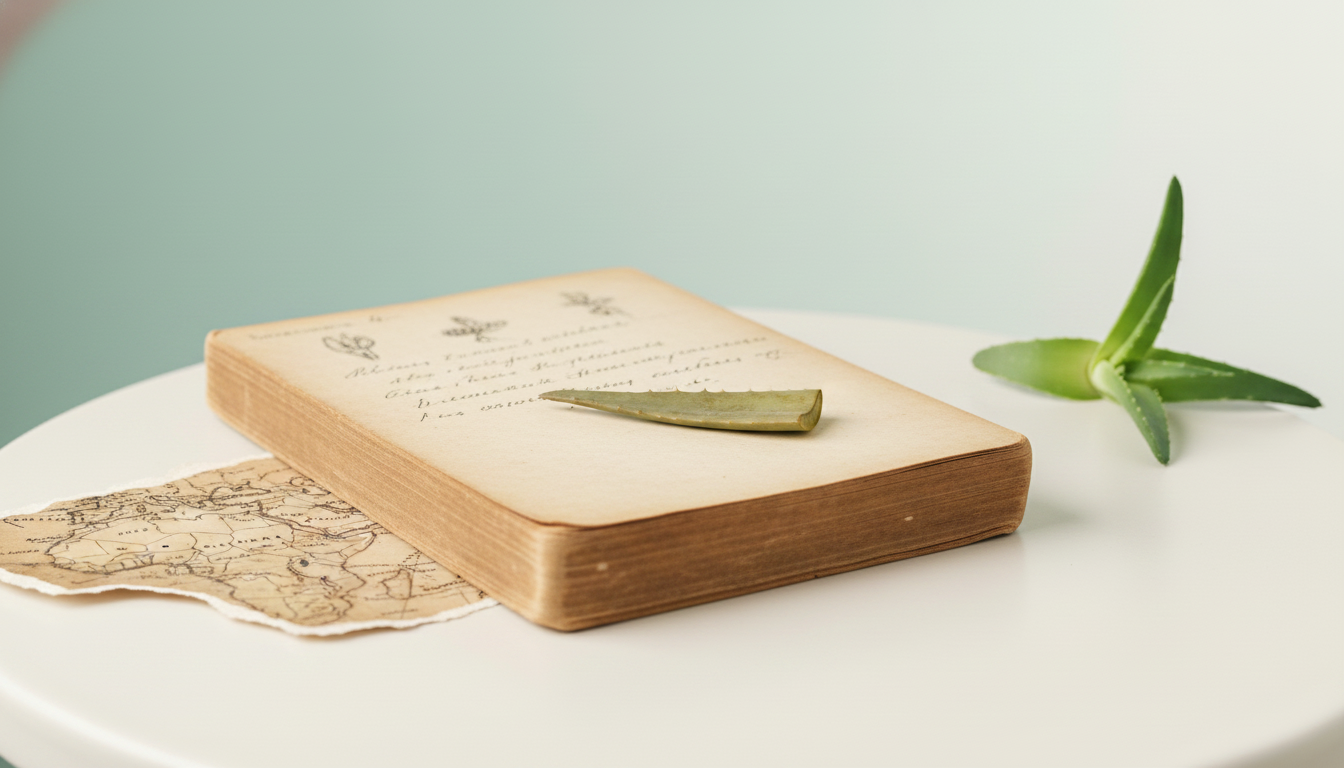
From Curaçao to Limpopo: The Curaloe Origin Story
The Curaloe story doesn't start in South Africa. It starts on a small Caribbean island called Curaçao — 11,000 km north-west of Cape Town — when the founders looked at the wild aloe naturalised across the island and decided to do something more interesting with it than leave it for the goats.
Years later, those same plants — or rather, their direct descendants — are growing in rows at the working plantation in South Africa's Limpopo, getting cold-pressed within hours of harvest, bottled on site, and stocked in 800+ pharmacies and wellness stores from Cape Town to Pretoria.
This is how that journey happened — and why every detail of it shows up in the bottle you hold.
If you haven't read the science side of why we grow Aloe barbadensis Miller specifically rather than indigenous Aloe ferox, our Aloe Barbadensis vs Aloe Ferox guide covers that in depth. This post is about the who and where — and why both matter.
Chapter 1: Curaçao
Curaçao is dry, sunny, salt-sprayed and full of aloe. The plant arrived from the Arabian Peninsula via the Spanish, who planted it across the Caribbean in the 16th century for its medicinal uses. By the 20th century, Aloe barbadensis Miller had naturalised across the island — so completely that locals stopped noticing it.
The founders, who came from a Dutch agronomy background, saw what the goats were chewing on and started doing the chemistry. Curaçao's volcanic soils, year-round sun, and minimal rainfall produced aloe leaves with unusually thick, polysaccharide-rich gel — denser than the same species grown in irrigated tropical conditions.
The first Curaloe products were small-batch: handpressed gel for skincare, sold to tourists and local pharmacies. Within a few years the operation had scaled enough to support exports — first to the Dutch domestic market (Curaçao was a Dutch territory at the time), then to broader Europe.
But Curaçao had a constraint: it's small. The island is 444 km². To meet European demand, the company faced a choice — either source aloe from somewhere else and lose the quality control, or find a second growing region with similar conditions and replicate the operation from scratch.
They chose the second path. And the search ended in South Africa.
Chapter 2: Why South Africa
In agricultural terms, Aloe barbadensis Miller needs:
- Long sun hours (8+ hours/day, year-round preferred)
- Mild winters (no frost — the plant cannot survive freezing)
- Low to moderate rainfall (~400-800mm/year ideal; too much rain causes rot)
- Well-drained sandy-loam soils
- Wide diurnal temperature swing (cool nights, warm days — concentrates the gel)
There are perhaps a dozen places on earth that match all five criteria simultaneously. South Africa's Limpopo — specifically the subtropical bushveld of Limpopo Province — is one of them.
Several other factors made South Africa the right partner:
- Established aloe culture. South Africa already has a centuries-long relationship with aloe (mostly Aloe ferox, the indigenous species used historically as a laxative). The agricultural know-how was there; new equipment and species were the only additions.
- Existing aloe industry infrastructure. ACAP (African Caribbean Aloe Products) was already operating in the region, with established farms, processing facilities, and trained workers. Curaloe didn't have to build from zero.
- Regulatory clarity. South African Department of Agriculture, Forestry & Fisheries (now DALRRD) and SAHPRA provided clear frameworks for aloe production, processing and food-supplement certification.
- Logistics for African and European export. OR Tambo (Johannesburg) and the Port of Durban give the plantation reliable shipping access to both African and European markets.
- People. Aloe processing — particularly the hand-filleting of the inner leaf — is skilled work. The Limpopo had a workforce experienced with aloe.
ACAP planted cuttings of the original Curaçao stock at the Iphofolo Game Farm in Vivo, Limpopo Province, and Curaloe is the consumer-facing brand of that South African operation.
Chapter 3: The ACAP plantation today
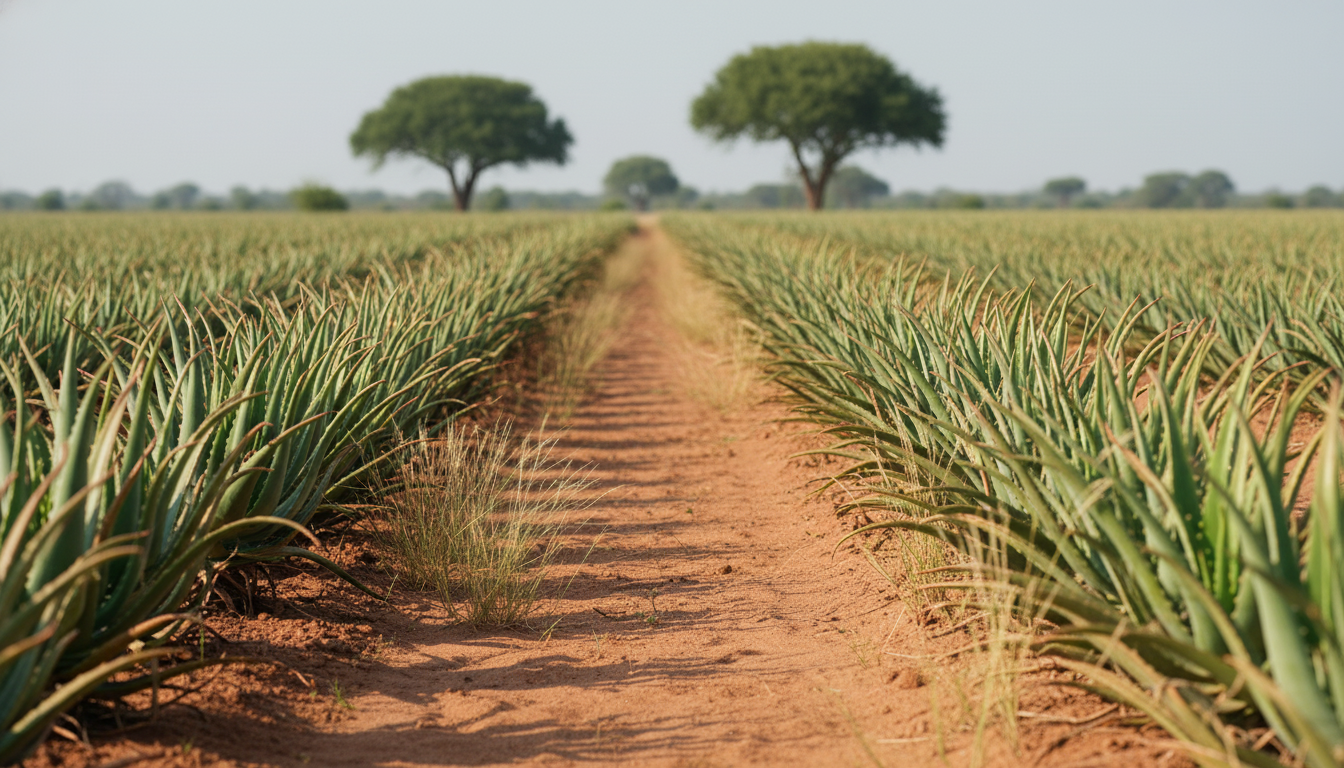
If you drive north from Polokwane into the Limpopo bushveld, you pass through some of South Africa's most distinctive terrain — open bushveld dotted with marula trees and red sandy plains. Roughly halfway, set in a sheltered valley, sits the working plantation of irrigated aloe rows.
A few details that matter:
Maturity-based harvesting
We harvest only plants that are 3 to 5 years old. Younger plants produce leaves with thinner gel and less polysaccharide; older plants slow their growth and become woody. The 3-5 year window is the sweet spot, and we plant in waves so that some portion of the plantation is in that window at all times.
Hand-cutting, not machine-cutting
Each leaf is cut by hand, at the base, with a curved knife. Machine cutting is faster but bruises the leaf — and a bruised leaf starts oxidising immediately, which costs acemannan content before the leaf even reaches the press.
Same-day fillet-and-press
From cut leaf to pressed juice, our target is under 4 hours. The leaves go from the field to the processing facility within the plantation perimeter — no road transport, no overnight storage of cut leaves. The longer cut leaves sit, the more degradation happens.
For more on what "cold-pressed" actually means in production terms, see our Cold-Pressed vs Reconstituted post.
Cold-pressing at low temperature
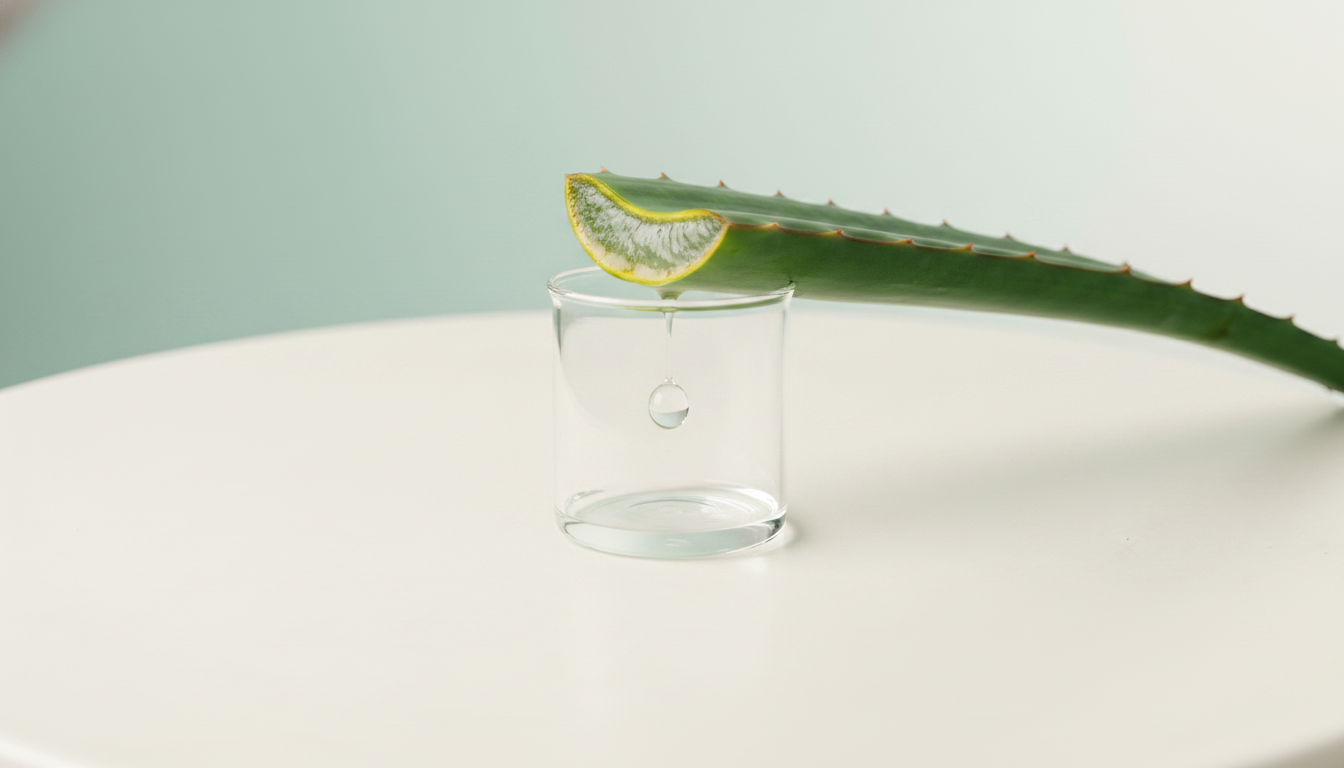
Inside the processing facility, the inner-leaf gel is separated from the rind and latex (the yellow sap layer that contains aloin), then pressed at low temperature into juice. No heat-based pasteurisation cycle that would break down the long polysaccharide chains.
Decolourisation
The juice is filtered through activated carbon to reduce the residual aloin to below 10 ppm — the European Food Safety Authority threshold for daily-use aloe products. This is what "decolourised" means on our label: the bitter laxative compound is largely removed, making daily drinking safe and palatable.
Bottling and sealing
The juice is bottled the same day it's pressed, sealed under inert gas to minimise oxidation, and labelled with the batch number for full traceability.
Certification
The facility holds HACCP (food safety management), Ecocert (NOP) organic certification, Kosher, and Halal certifications. These are independently audited annually.
Chapter 4: What ended up in the bottle
You can read the spec sheet on our Aloe Vera Juice 1L PDP, but the short version:
- 98% Aloe barbadensis Miller inner-leaf juice (decolourised, organically grown)
- 0.3% citric acid (natural preservative)
- 0.2% ascorbic acid (antioxidant stabiliser)
- 0.15% potassium sorbate (food-grade preservative)
- 0.1% sodium benzoate (food-grade preservative)
No added sugar. No alcohol. No artificial flavours, colours or fragrances. No GMO ingredients.
The 2% non-aloe content is the minimum needed to keep the bottle stable through the supply chain to your kitchen. Any product claiming "100% aloe" with a 12-month shelf life either has aggressive heat processing (which costs acemannan) or has a creative definition of "100%."
For more on what acemannan is and why it matters, see our companion post: Acemannan: The Key Compound in Quality Aloe Vera.
Chapter 5: Retail partnerships in South Africa
By 2018, Curaloe products were on the shelves of Dischem, Clicks, Wellness Warehouse, and Van Heerdens — covering the four major pharmaceutical and wellness retail chains in the country.
This matters for two reasons:
- Each chain has its own quality team. Dischem and Clicks especially run regular audits on products carried in pharmacy aisles. The fact that Curaloe juice and capsules have been on those shelves continuously for years is itself a quality signal.
- Local availability matters. If you're in Cape Town and want to try the juice before committing to a 1L bottle, you can walk into any major Wellness Warehouse and pick one up. The travel-friendly 500ml format is specifically sized for first-time trial.
The online store (curaloe.co.za) handles direct-to-consumer orders, subscription supply, and the broader skincare line — but the retail relationships ensure Curaloe is a daily-purchase product, not a niche online-only brand.
Chapter 6: What's next
The current focus areas for Curaloe ZA:
1. Expanding the skincare line
The Aloe juice was the original anchor product, but the topical skincare range — gels, creams, serums — has been growing fast. Aloe Barbadensis is particularly well-studied for topical applications (more in our SA Skincare pillar).
2. Sustainability investment
Water use in subtropical Limpopo bushveld is a real constraint. Our recent capital investment has been in drip irrigation, water recapture from the processing facility, and solar-powered processing equipment. We document the specifics in the Sustainability at ACAP post.
3. Education content
The South African aloe market is full of products labelled "aloe vera" that are something else entirely (Ferox blends, reconstituted powder, mostly-water drinks). Consumer education — like the post you're reading — is the antidote.
Frequently asked questions
Q: Is Curaloe a South African company?
A: The original holding company was Dutch (Curaçao was a Dutch territory). Curaloe South Africa operates as a separate entity with South African ownership and South African production, sourcing 100% from the local ACAP plantation. The brand and original cultivar are inherited from the Curaçao operation.
Q: Is the aloe imported?
A: No. Every Curaloe Aloe Vera Juice and Capsule product sold in South Africa is grown, harvested, processed and bottled on the ACAP plantation at Iphofolo Game Farm in Vivo, Limpopo Province. Nothing is imported. The Curaçao operation continues separately for Caribbean/European markets but is not connected to South African supply.
*Q: Why doesn't Curaloe use Aloe ferox?*
A: Aloe ferox is indigenous to South Africa and is historically used as a laxative due to its high aloin content. Aloe barbadensis Miller is a different species with a substantially different chemistry — more polysaccharides (acemannan), less aloin — which makes it better suited to daily-use products. We respect Aloe ferox and its place in traditional medicine; it's just a different product for a different purpose. See the Barbadensis vs Ferox pillar for the full comparison.
Q: How do I visit the plantation?
A: We don't currently offer public farm tours, though we are exploring a top-tier loyalty perk that would include a visit. If you're a wellness or food-industry professional with a research interest, contact hello@curaloe.co.za.
Q: Where can I buy Curaloe products in South Africa?
A: Online at curaloe.co.za, and in-person at Dischem, Clicks, Wellness Warehouse and Van Heerdens stores nationwide. Stock varies by store size; the 1L juice, 500ml juice and capsules are the most widely stocked.
Q: Are Curaloe products certified organic?
A: Yes — the juice and capsule lines are Ecocert-certified (NOP organic standard). The certification is renewed annually with documentation available on request.
The short version
Curaloe is the product of three good agricultural decisions made decades apart:
- Picking the right species (Aloe barbadensis Miller, not the cheaper-but-different Aloe ferox)
- Picking the right place (Limpopo Province, with the climate and infrastructure to grow it properly)
- Picking the right processing (cold-pressed inner-leaf, decolourised, low-temperature, fast-to-bottle)
You can taste the consequence of those three decisions in the bottle. You can also see it in 5,279 ZAR of net sales per 90 days from just our 1L juice — and the 800+ retail partner relationships that keep restocking it.
The full product range starts with the Aloe Vera Juice 1L (the daily-routine size), branches to the 500ml travel format, and includes the Aloe Vera Capsules for people who'd rather skip the taste.
We're proud of the story. We're prouder of the bottle.
Note: Curaloe products are food supplements, not medicines. If you are pregnant, breastfeeding, on prescription medication, or have a chronic condition, please consult your healthcare provider before adding any supplement to your routine. Information in this post is educational and not medical advice.
Internal links (audit)
- /products/aloe-vera-juice-1l-health-boost (×3)
- /products/aloe-vera-juice-500ml-wellness-boost (×2)
- /products/aloe-vera-60-capsules (×2)
- /blogs/.../aloe-barbadensis-vs-aloe-ferox-the-science (×3) — cross-cluster up to Science pillar
- /blogs/.../acemannan-key-compound-aloe-vera (×1) — sibling cluster post
- /blogs/.../cold-pressed-vs-reconstituted-aloe-juice (×1) — Science support
- /blogs/.../skincare-south-african-climates-aloe (×1) — cross-cluster to Skincare
- /blogs/.../curaloe-sustainability-practices (×1) — sibling Provenance
Related: Why Curaloe grows Aloe vera (Aloe barbadensis Miller), not Aloe ferox →

Leave a comment
This site is protected by hCaptcha and the hCaptcha Privacy Policy and Terms of Service apply.