
Inside the ACAP Plantation: A Farm-to-Bottle Look at Where Curaloe Aloe Grows
Most aloe vera products on South African shelves have no farm. They have a packing facility, a marketing brief, and a supplier list that traces back to a wholesale powder broker. The actual leaves were grown thousands of kilometres away, often on plantations the brand has never visited.
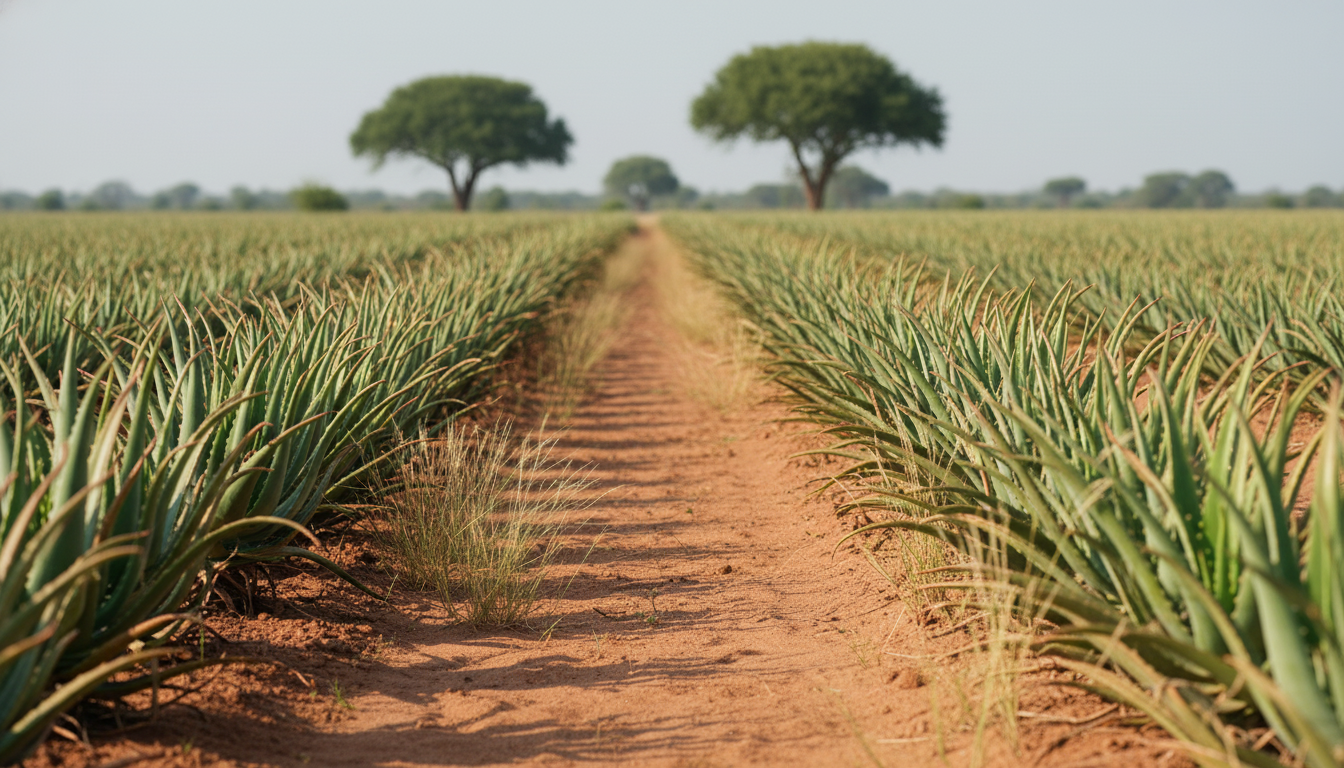
Curaloe works differently because we own the farm. Every leaf that ends up in a Curaloe 1L juice, every capsule, every tube of aloe gel starts its life at the ACAP plantation at Iphofolo Game Farm in Vivo, Limpopo Province — a single-site, single-species Aloe barbadensis Miller operation that we control end-to-end.
This post takes you through what that actually means in practice: where the farm is, how the soil and climate shape the plants, what a day of hand harvesting looks like, and how a leaf moves from soil to sealed bottle.
For the wider brand origin and the link between our Curaçao roots and our South African operation, see From Curaçao to Limpopo: The Curaloe Origin Story.
Where the farm is
ACAP — the African Caribbean Aloe Products — sits in the Limpopo, at the base of the Soutpansberg mountain range, in the subtropical bushveld of northern Limpopo. It's roughly the same latitude band as parts of southern Mexico and the Mediterranean — geographies that have always produced strong-performing Aloe barbadensis.
The site was chosen for three converging reasons:
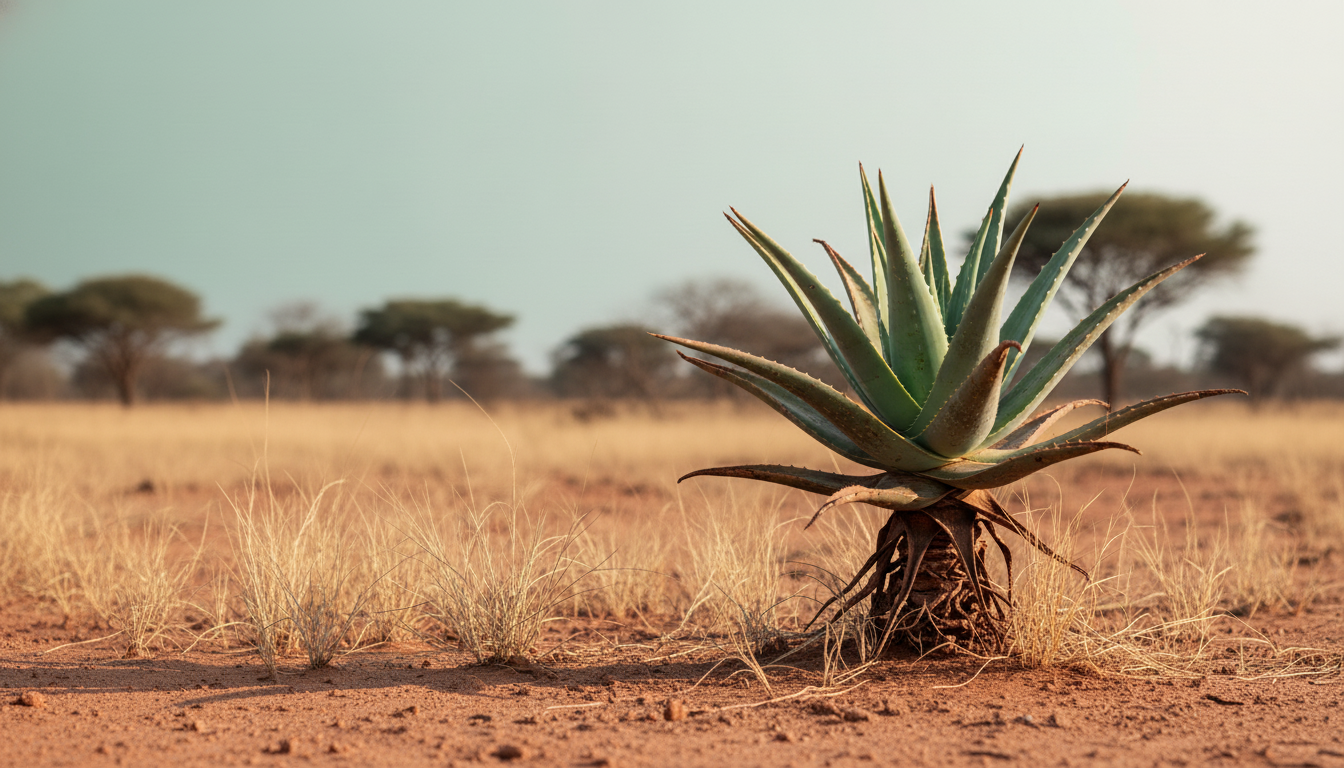
- Climate match. Aloe barbadensis Miller is a sub-tropical succulent. It thrives in mild winters, long warm dry summers, and high diurnal temperature swings (warm days, cooler nights). The Limpopo bushveld belt gives all three.
- Soil chemistry. The plant prefers well-draining, mineral-rich sandy loam. The ground at ACAP is naturally low-organic, mineral-heavy, and well-drained — the exact conditions where aloe forms thick, polysaccharide-dense inner gel rather than thin watery flesh.
- Year-round growing season. Unlike northern-hemisphere aloe operations that have a dormant winter, Limpopo Province site lets the plants accumulate biomass all twelve months. We can plan harvest cycles around plant maturity, not around frost.
The local economy is largely agricultural, and the plantation has become one of the area's larger employers. We talk more about the social and environmental dimensions of that in Sustainability at Curaloe ACAP.
What grows on the farm — and what doesn't
Single species, single cultivar. The entire plantation is Aloe barbadensis Miller, propagated from a controlled mother-plant stock to keep the genetic line consistent.
That sounds obvious, but it isn't. Many "aloe" plantations interplant multiple aloe species — sometimes Aloe barbadensis mixed with the indigenous South African Aloe ferox, sometimes with hybrids or whatever the local nursery happened to have. The mixture gets pressed together. Whatever ends up in the bottle is a blend.
We don't blend. Every plant on the ACAP farm is Aloe barbadensis Miller, and we can document the propagation chain back to the original mother stock. That single decision is what allows us to put a clean species name on every bottle — and to make the kind of polysaccharide-content claim we make in our acemannan explainer.
What we don't have on the farm:
- No greenhouse cover. Plants grow in full open-air conditions, getting full sunlight and natural temperature variation. This produces thicker leaves with denser inner gel than greenhouse-grown aloe.
- No artificial irrigation overdrive. We irrigate to keep plants alive through dry stretches, but we deliberately don't push for the rapid growth that flood irrigation produces. Slow-grown aloe is denser aloe.
- No herbicide ground cover. Weed control is mechanical and hand-pulled, not chemical, both for soil health and to avoid herbicide residue showing up in juice testing.
- No interplanted crops. The aloe is the whole crop. This simplifies pest management and means there's nothing else's pesticide programme to worry about.
How long it takes to grow a harvestable leaf
A propagated Aloe barbadensis pup takes roughly 3 to 4 years to grow into a plant whose leaves are large enough, mature enough, and chemically rich enough to harvest commercially.
Once mature, a single plant produces harvestable outer leaves on a rolling cycle for 8 to 12 years before being rotated out and replaced. We harvest the outer ring of leaves from each plant — those are the oldest, largest, and most polysaccharide-dense. The inner leaves continue growing outward, and the cycle continues.
This is why aloe agriculture rewards patience. There's no shortcutting a 3-year establishment period. Producers who try — by buying very young plants, or by harvesting immature inner leaves — end up with thin, watery juice that doesn't have the gel content the species is known for.
A day of hand harvesting
Industrial aloe harvesting in some parts of the world is mechanised: machines cut entire plants down at the base. We don't do that for two reasons. First, it destroys the plant. Second, it indiscriminately takes immature leaves alongside mature ones, which dilutes the harvest.
At ACAP, every harvestable leaf is cut by hand, with a flat-bladed knife angled downward at the base of the leaf so the cut seals quickly and the plant remains intact. A harvester moves through the rows and selects only the outer ring of leaves on each mature plant.
A typical harvest day starts at sunrise. The reasons are practical:
- Cooler leaves. Cut in the cool morning, the inner gel is at its most stable. Mid-day heat starts pre-degradation of polysaccharides the moment a leaf is cut.
- Reduced oxidation window. From cut to press, every minute counts. Morning harvest minimises the time the cut leaves spend exposed.
- Worker conditions. Limpopo afternoons in summer regularly exceed 35°C. Morning harvest is safer and the worker output is higher.
Cut leaves are immediately stacked cut-end-down on flat trays (to slow the oozing of yellow latex from the cut surface) and moved into shaded transport bins. They are at the on-site processing facility within hours — not days.
For more on why this matters for the final product, see our post on hand harvesting and our cold-pressed vs reconstituted comparison.
From harvest to bottle: the same-day pipeline
Once the leaves arrive at the on-site processing facility, the clock is what matters most. Every additional hour means more polysaccharide breakdown, more oxidation, more nutrient loss. The whole pipeline is designed around getting from cut leaf to sealed bottle in the same calendar day.
Step 1 — Wash & inspect (within 1 hour of arrival)
Leaves are rinsed, inspected for damage or insect contact, and the small percentage that fail QC are diverted to compost.
Step 2 — Fillet (within 2 hours of arrival)
The outer rind and the latex-bearing yellow layer are removed, exposing the clear inner-leaf gel. This is the step that separates inner-leaf production from cheaper whole-leaf processing. We explain the trade-off in detail in our decolourised vs whole-leaf guide.
Step 3 — Cold-press (within 4 hours)
The inner-leaf gel is mechanically pressed at controlled low temperatures. No high-heat pasteurisation, no enzymatic stabilisers, no aggressive depulping. The output is a clear, slightly viscous liquid — raw cold-pressed aloe juice.
Step 4 — Light decolourisation & filtration
A gentle activated-carbon polish removes residual colour and brings aloin content well below the 10 ppm regulatory limit. Because our starting material is inner-leaf only, this step can be light — preserving the acemannan and other polysaccharides intact.
Step 5 — Stabilise & bottle (within 8-10 hours)
Citric acid is added at food-grade levels for shelf stability. The juice is bottled into light-protective containers, sealed, and labelled. By the time the day ends, the leaf you saw cut at sunrise is a sealed bottle ready for cold-chain dispatch.
This pipeline is only possible because the field, the processing facility, and the bottling line are all on the same site. The moment you put aloe leaves on a truck for a multi-hour journey to a separate processor, the time-to-press window blows out — and the polysaccharide content suffers.
What this means for what's in your bottle
Three things follow from the farm-to-bottle structure described above:
- Species certainty. Every bottle is single-species Aloe barbadensis Miller. No blending, no substitution risk, no surprise Aloe ferox.
- Polysaccharide preservation. Hand harvest at dawn, fillet within 2 hours, cold-press within 4, bottled the same day. That timeline is what makes a real cold-pressed claim possible — and it's what produces juice with intact long-chain polysaccharides instead of fragmented byproducts.
- Traceability. We can trace any production batch back to a specific field block and harvest date. If you ever email us asking where the leaves in your bottle came from, we can give you a real answer, not a marketing answer.
That's why we keep saying the farm matters. It's not romance — it's the only way the rest of the brand promise actually holds up.
Why this is unusual in the South African aloe market
Most SA aloe products fall into one of two categories:
- Aloe ferox harvest cooperatives, which collect leaves from wild or semi-wild plants and process them for the traditional bitter laxative market. These produce a valid product for what it is, but it's a completely different species and category from what we make.
- Re-bottled imported aloe, where a South African company imports aloe powder or concentrate from Mexico, China, or India, rehydrates it locally, and bottles it under a South African brand. The actual agricultural origin is rarely disclosed.
A vertically integrated Aloe barbadensis plantation that grows, harvests, processes, and bottles all on one site in South Africa is genuinely rare. It's expensive to set up. It takes 3-4 years before the first harvest can sustain commercial volumes. And it ties the brand to one geographic location's weather, labour conditions, and infrastructure.
We think those costs are worth it because they're the only way to make the quality claim real. The alternative — buying powder, rehydrating it, calling it "South African aloe" — is cheaper, but it's not the product we want to put our name on.
What you're actually paying for
When you compare a Curaloe 1L Juice to a R39 supermarket "aloe drink", the price gap is the gap between an agricultural operation and a flavoured-water operation.
You're paying for: a 3-4 year propagation cycle on owned land, hand harvest at dawn, same-day cold-press, inner-leaf-only fillet processing, single-species genetic control, on-site QC, light decolourisation, and full batch traceability.
For people who'd rather have the same material in a concentrated daily-use format, our aloe vera capsules use the same farm-to-bottle juice in freeze-dried form. Same farm. Same species. Same processing standards.
FAQ
Where exactly is the ACAP plantation?
In Limpopo Province of South Africa, in the inland transition zone between the Limpopo and the coastal belt. The exact farm location is shared on tours arranged via our wholesale team, but for security and biosecurity reasons we don't publish the GPS coordinates online.
Can I visit the farm?
Yes, with advance arrangement. We host visits for wholesale partners, journalists, and occasionally consumers via our newsletter list. Email us if you'd like to be considered.
Do you use pesticides on the farm?
We use integrated pest management — biological controls, beneficial insect populations, and mechanical methods first. Pesticide use is minimal, targeted, and always within South African food-safety regulations for products consumed as juice. Detailed protocols are available on request.
Are your workers permanent or seasonal?
Both. The plantation employs a permanent core team year-round (planting, processing, QC, admin) and ramps up with seasonal harvest workers during peak cycles. Wages are above the agricultural minimum, with extended healthcare access.
Is the farm organic-certified?
The plantation is certified organic by Ecocert, to both the USDA National Organic Program (NOP) and EU organic standards — covering the cultivated Aloe barbadensis Miller and our processed aloe (juice, concentrate, powder and more). Our practices include minimal synthetic inputs, mechanical weed control and biological pest management, and independent batch testing for residues is part of our regular QC.
Note: Curaloe products are food supplements, not medicines. If you are pregnant, breastfeeding, on prescription medication, or have a chronic condition, please consult your healthcare provider before adding any supplement to your routine. Information in this post is educational and not medical advice.
Related: Why Curaloe grows Aloe vera (Aloe barbadensis Miller), not Aloe ferox →

Leave a comment
This site is protected by hCaptcha and the hCaptcha Privacy Policy and Terms of Service apply.