
Hand-Harvesting Aloe: Why the Old Method Still Wins
In most modern commercial agriculture, hand-harvesting is the exception, not the rule. Wheat, maize, soybeans, sugar beet, cotton — all moved to mechanised harvest decades ago because machines are faster, cheaper, and more consistent than human hands. The economic logic is hard to argue with for those crops.
Aloe is different. At the Curaloe ACAP plantation in Limpopo, every harvestable leaf is still cut by hand, by a trained harvester, with a flat-bladed knife. It's slower than mechanised harvesting. It costs more per kilogram of yield. And it's the right choice for what we're trying to produce — for reasons that are specific to aloe agriculture and to the quality of the finished juice.
This post explains why hand-harvesting still wins for Aloe barbadensis Miller production, what mechanised alternatives actually look like in practice, and how the harvesting method shapes what ends up in your 1L bottle. For the broader farm context, see Inside the ACAP Plantation.
What hand-harvesting actually looks like
A typical dawn harvest at ACAP:
- 5:30am start. The team is in the field at first light, when leaf temperature is at its lowest and the inner-gel polysaccharides are at their most stable.
- Plant selection. Each plant is assessed visually — has it reached harvest maturity? Are the outer-ring leaves the right size and colour? Is the plant in active growth or recovering from a previous harvest?
- Leaf selection. Only the outer ring of mature leaves is cut. Inner leaves continue growing outward. The plant itself remains intact and productive.
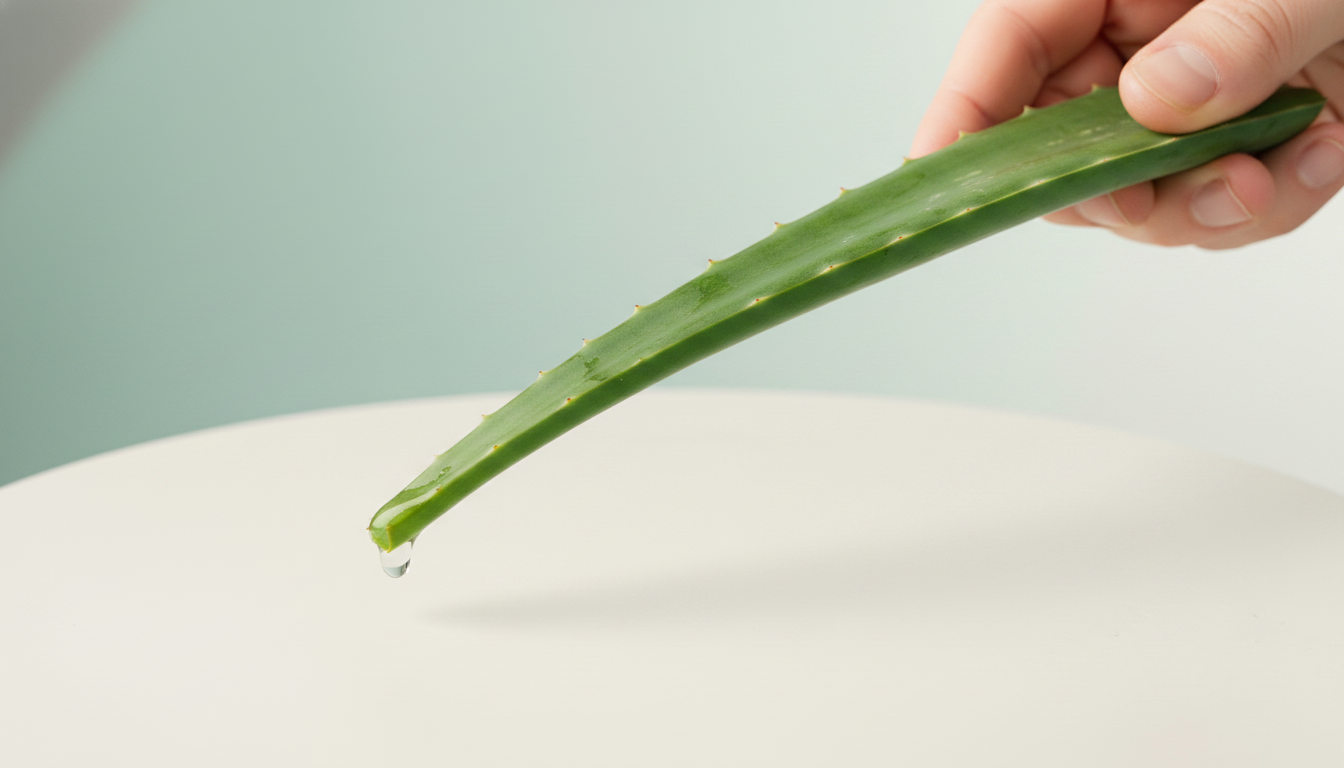
- The cut. A flat-bladed knife at a shallow downward angle severs the leaf at its base, against the stem. The cut is single-stroke, clean, and angled so the latex layer drains away from the inner gel.
- Stacking. Cut leaves are placed cut-end-down on flat trays so the yellow latex bleeds out rather than pooling against the inner gel.
- Transport. Filled trays move to the on-site processing facility within hours of cutting.
A trained harvester moves through the rows at a steady pace, can identify plant readiness at a glance, and produces consistent cuts that don't damage the mother plant. The skill is learned over weeks and refined over years.
What mechanised aloe harvesting looks like
Industrial aloe operations in parts of Mexico and Asia have moved toward two mechanised approaches:
1. Whole-plant cutting
Machines cut entire plants down at ground level, indiscriminately. The whole plant goes to processing — mature leaves, immature leaves, the stem itself.
Trade-offs:
- Pro: Fastest possible harvest. Highest yield per machine-hour.
- Con: Destroys the plant. Has to be replanted. Wastes 3-4 years of accumulated plant maturity.
- Con: Immature leaves dilute the harvest. Younger leaves have lower polysaccharide content, less inner gel, and contribute thin watery material that drags down the average.
- Con: Stem matter contaminates the harvest with cellulose and fibre that has to be filtered out downstream.
2. Leaf-stripping machines
Specialised machines run along rows and strip leaves from plants automatically.
Trade-offs:
- Pro: Doesn't destroy the plant. Higher throughput than hand harvest.
- Con: Can't distinguish mature from immature leaves. Takes everything, including leaves that should have been left to grow another season.
- Con: The cut is often less clean — leaves are pulled rather than sliced, which damages the cut surface and can rupture the inner cells of the cut leaf.
- Con: Operates regardless of time of day, so harvest happens in mid-day heat (worse polysaccharide stability) rather than dawn.
Both mechanised approaches deliver more leaves per hour of labour. Both also deliver lower-quality harvest material than skilled hand cutting.
Why this matters for what ends up in the bottle
Six specific quality effects flow from the harvest method:
1. Polysaccharide density of the average leaf
Hand-harvested mature outer-ring leaves are the highest-polysaccharide-content leaves the plant produces. A machine that takes everything indiscriminately averages these down with thinner immature leaves. The juice from the resulting bulk material is lower in long-chain polysaccharides (including acemannan) than juice from selectively-harvested mature leaves.
We explain the polysaccharide side specifically in our acemannan post.
2. Time-of-harvest cell stability
Dawn harvest captures leaves at their most stable state — coolest leaf temperature, most ordered cell structure, lowest enzymatic activity. Mid-day machine harvest captures leaves at near-peak heat, with active cellular processes already pre-degrading the inner gel before pressing.
3. Cut quality and post-harvest stability
A clean knife-cut at the base of the leaf seals quickly. A pulled or torn cut (typical of leaf-stripping machines) exposes more surface area, oxidises faster, and leaks more inner gel before processing. Pulled cuts also damage the leaf cells immediately above the cut line, which means more cellular content is exposed and degraded.
4. Plant longevity and yield over time
Hand-selective harvest leaves the plant intact and productive. Each mature aloe plant at ACAP produces harvestable leaves on a rolling basis for 8-12 years. Whole-plant mechanised harvest destroys the plant, requiring replanting and a fresh 3-4 year propagation cycle. The hand-harvest approach is slower per-day but produces more total juice over the life of a field block.
5. Pest and disease control
A trained harvester notices a sick plant, a pest infestation starting in a corner of a row, or unusual leaf damage that needs investigation. A machine doesn't. Hand harvest doubles as a daily field-inspection process. Small issues get caught early.
6. Latex layer management
The clean knife cut, angled downward, lets the yellow latex drain away from the inner gel. A machine cut tends to mash the latex layer into the inner gel, increasing aloin contamination of the press material and forcing more aggressive downstream filtration — which costs polysaccharide content. We unpack the filtration side in our decolourised vs whole-leaf post.
The labour question — done well, hand harvest is also a labour story
Hand-harvesting requires more labour than mechanised harvesting. That's the trade-off the economics of mass-market aloe try to avoid. But labour-intensive doesn't have to mean exploitative — and at scale, it can be the centre of a viable rural employment strategy.
At ACAP, harvest work is paid above the South African agricultural minimum wage, with structured contracts, training, and progression paths. We track returnee rates from season to season as a quality and ethics signal — workers who keep coming back are workers who are being treated reasonably. Skills development in plant identification, harvest technique, and basic plant health is built into the work.
This is part of why we run the operation the way we do. The hand-harvest approach is the right choice for product quality. It's also the right choice for the local economy. We talk about the broader labour and community side in our sustainability post.
What hand-harvesting can't fix
Being honest about limits: hand-harvest doesn't compensate for other production weaknesses. A producer who hand-harvests but then ships leaves a day's drive to a separate processing facility loses the time-to-press advantage. A producer who hand-harvests but uses whole-leaf processing downstream loses the inner-leaf advantage. A producer who hand-harvests but reconstitutes with imported powder isn't telling the truth about what's in the bottle.
The benefits of hand-harvesting only fully materialise when paired with:
- On-site processing facility (no long transport)
- Same-day cold pressing
- Inner-leaf filleting
- Light decolourisation
- Same-day bottling
This is the full pipeline we describe in the ACAP plantation post. Hand-harvest alone, embedded in a broken pipeline, is just an expensive marketing line.
What it costs
Hand-harvesting is the largest single labour cost in the ACAP operation. It's the reason a Curaloe 1L juice cannot match the price point of a R39 supermarket aloe drink, and it's not a cost we have any plans to engineer away.
The supermarket product is made by buying spray-dried imported aloe powder and rehydrating it in a factory — there is no harvest cost because there's no harvest happening at the bottler's end. We're operating in a different category of production. The labour cost is part of what produces the quality difference.
For people who want the same hand-harvested ACAP material in a more concentrated daily-use format, our aloe vera capsules use the same farm-to-bottle juice in freeze-dried form.
Why "the old method" actually fits modern quality standards
Hand harvest sounds traditional, and it is — but it survives as the dominant method for premium aloe production because it produces the best inputs to a modern quality-focused processing pipeline. There are no automation breakthroughs on the horizon that produce better-quality aloe harvest material than skilled hand cutting. The economics may keep pushing the bulk market toward mechanisation, but the premium-quality end of the category stays hand-cut for the same reasons it always has.
This is one of the rare cases where the old way and the right way are still the same way.
FAQ
Could you train machines to do what your harvesters do?
Not yet, at any reasonable cost. The judgment calls about plant maturity, leaf selection, and field-condition awareness are genuinely difficult to automate. Future-vision-AI-assisted harvest machines may eventually narrow the gap, but the current state of the technology doesn't compete with skilled hand work for quality.
How many leaves can one harvester cut in a day?
It depends on plant density, field conditions, and individual skill, but a trained harvester can cover a meaningful field area per shift. We're not optimising for raw speed — we're optimising for cut quality and selection accuracy.
Is hand-harvest organic-certified?
Hand-harvest itself isn't a certification — it's a method. We discuss the organic certification question in our sustainability post.
Does the cutter use the same knife all day?
Knives are cleaned regularly through the shift and replaced as needed for sharpness. Clean sharp tools cut cleaner. Dirty or dull tools tear, which is bad for both the leaf and the mother plant.
What happens to the cut plants over a 10-year cycle?
Mature plants continue producing outer leaves season after season. After roughly a decade, productivity drops and the field block is rotated out — the spent plants are composted back into the field, new propagated stock takes their place, and the 3-4 year establishment cycle starts again on that block.
Note: Curaloe products are food supplements and topical cosmetics, not medicines. If you are pregnant, breastfeeding, on prescription medication, or have a chronic condition, please consult your healthcare provider before adding any supplement to your routine. Information in this post is educational and not medical advice.
Related: Why Curaloe grows Aloe vera (Aloe barbadensis Miller), not Aloe ferox →

Leave a comment
This site is protected by hCaptcha and the hCaptcha Privacy Policy and Terms of Service apply.