
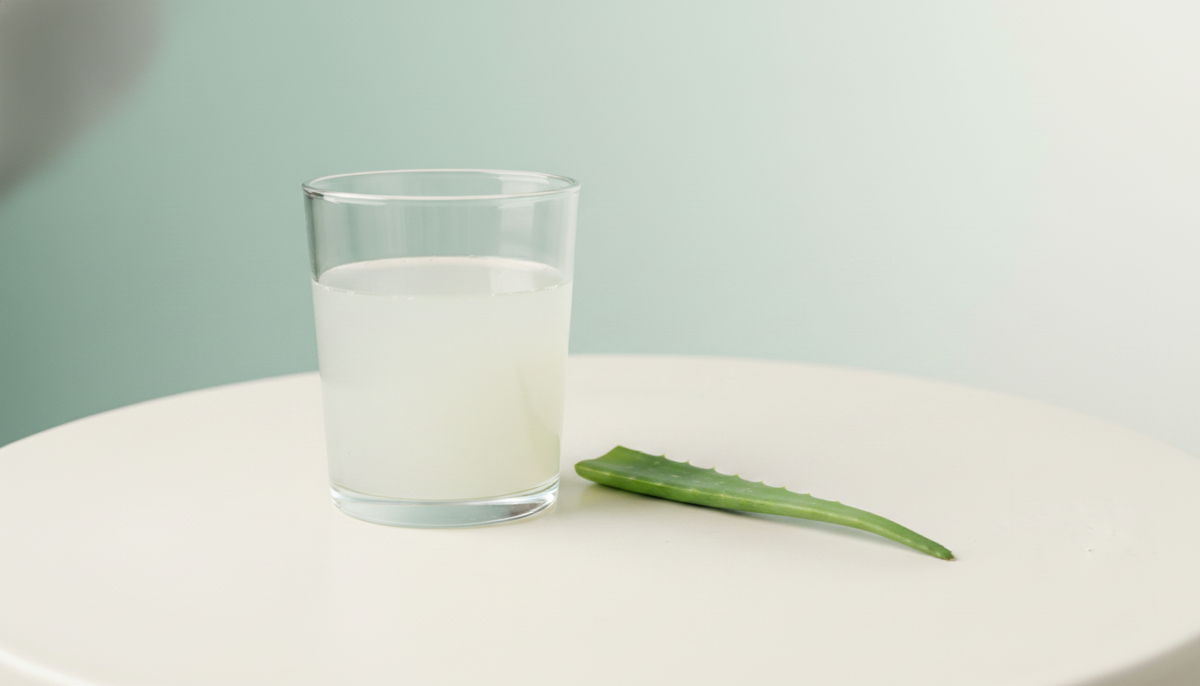
The Daily Aloe Juice Ritual: A Practical Guide for South Africans
If you bought a bottle of Curaloe Aloe Vera Juice and then stood in your kitchen wondering "OK… now what?" — this guide is for you.
A lot of online content about aloe juice falls into two camps. The first makes wild health claims that no responsible producer can endorse (cures this, fixes that, banishes the other). The second is so cautious it tells you nothing useful at all.
This post tries to do something different: be practical, specific, and honest. We'll cover when to drink it, how much, what to mix it with, what realistic expectations look like — and what to do if you don't like the taste.
For the bigger picture on what's actually in the bottle and why it matters, see our Aloe Barbadensis vs Aloe Ferox guide and Acemannan post.
Before you start: who this is for
This routine is designed for healthy adults who want to add aloe juice to their daily lifestyle as part of a broader wellness routine that also includes:
- Adequate water (≥ 2 L/day)
- Regular fibre intake
- Sufficient sleep
- Movement / exercise
Aloe juice is a wellness drink, not a fix for an unbalanced lifestyle. Treat it as one supportive element among many.
Who this is NOT for
- Children under 10 (consult a paediatric professional first)
- Pregnant or breastfeeding individuals (consult your healthcare provider)
- People on prescription medication — particularly for the heart, kidneys, or for diabetes (the polysaccharides in aloe can interact)
- People with kidney disease, inflammatory bowel disease, or chronic diarrhoea — always check with your doctor first
- People with known allergies to aloe or related Asphodelaceae plants
If any of those apply, talk to your healthcare provider before starting. This guide is not medical advice.
What we can and can't claim
Curaloe is a food supplement, not a medicine. Under SAHPRA regulations in South Africa, that means we cannot make claims about treating, curing, or preventing disease. So you will NOT see this guide say "drinks X to cure Y."
What you WILL see: information about traditional daily uses, suggested servings, mixing options, and what to look for when choosing a quality juice. That's the bounded conversation we can have honestly.
Serving size: how much per day
Curaloe Aloe Vera Juice is decolourised (aloin-reduced) and formulated for daily use. The label suggested serving is 30-60 ml per day.
Why that range?
- 30 ml is a comfortable starting amount for first-time users. Think one shot glass.
- 60 ml is the upper end of the daily serving range — about a quarter cup.
- Going above 60 ml/day isn't recommended without specific guidance. More is not better.
A 1L bottle at 30 ml/day = 33 days. At 60 ml/day = 16-17 days. That's why the bottle is sized for a roughly one-month routine.
The 500ml format
The 500ml bottle is sized for ~15 days at 30 ml/day. It's the right format for:
- First-time trial (commit less)
- Travel (smaller bag fit)
- A focused 2-week routine
Capsules instead
If the taste of fresh aloe juice isn't for you (it's earthy and slightly bitter — there's no hiding it), the 60-capsule bottle puts the same aloe into a convenient pill form. One to two capsules per day; one bottle lasts 1 to 2 months. Same Aloe barbadensis from the same plantation, just dried into powder and encapsulated.
When to drink it
The most traditional time is first thing in the morning, on an empty stomach, before breakfast. The reasoning behind this practice (centuries old, not specific to any one culture):
- Empty stomach means nothing else is being digested at the same time
- Wake-up routines build habit better than mid-afternoon impulses
- Drinking it with a full glass of water immediately after gives you a hydration win at the same time
But "must drink it on empty stomach at 6 AM" is too prescriptive. Three options that work:
Option A: The morning shot
Pour 30 ml into a small glass. Drink it in one go. Immediately chase with a full glass of water (250 ml). Wait 15-20 minutes before eating breakfast.
This is the simplest version. Total time investment: 30 seconds.
Option B: The breakfast mixer
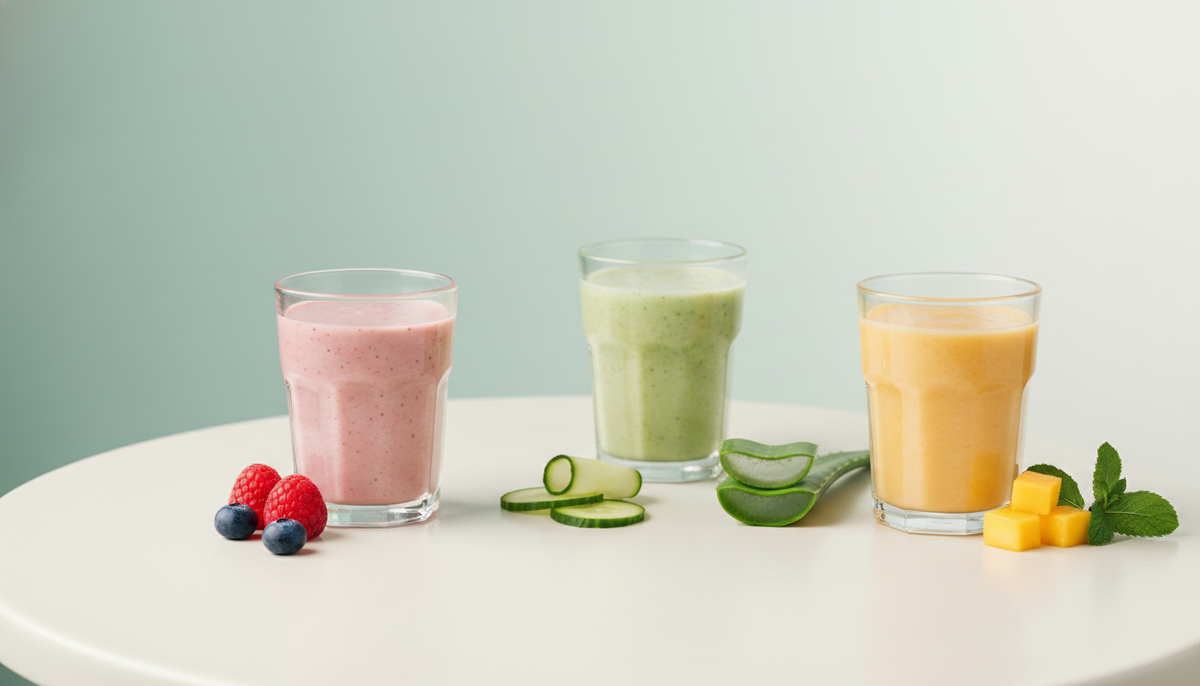
Pour 30-60 ml into your morning smoothie, fruit juice, or even iced rooibos tea. The aloe earthiness disappears almost entirely when mixed with citrus or berry flavours.
Good combinations:
- Aloe + freshly squeezed orange juice (the citrus masks the earthy notes)
- Aloe + green smoothie (spinach, banana, water)
- Aloe + frozen mixed berries + plain yoghurt + a splash of honey
- Aloe + iced rooibos tea + lemon
See our 5 South African Aloe Smoothie Recipes for specific recipes with measurements.
Option C: The post-workout drink
For people who exercise in the morning, a post-workout aloe + coconut water mix (30 ml aloe + 200 ml coconut water) is a hydration-focused alternative.
The aloe juice has nothing to do with sports performance per se — the science doesn't support that claim — but if you're already drinking something to rehydrate after exercise, aloe is a neutral-tasting addition that you might prefer over plain water or a sugary sports drink.
What to avoid
- Don't take it with prescription medication. The polysaccharide content can slightly affect absorption. If you take morning medication, take the medication first, wait an hour, then drink the aloe juice. (Or just check with your pharmacist.)
- Don't store it on the counter once opened. Refrigerate after opening; consume within 30 days.
What to realistically expect
This is the section most aloe juice content gets wrong. Let's be honest.
What you might notice (week 1-2)
- Mild bowel changes. The aloin in aloe is a laxative — and even decolourised juice has trace amounts. Some people notice slightly looser stools in the first week. This usually settles.
- Hydration habit. Because the routine includes a glass of water, you might find yourself naturally drinking more water through the day.
- No dramatic immediate effect. If anyone tells you they "felt amazing immediately" — they're describing the placebo effect or the hydration habit, not the aloe itself.
What you shouldn't expect
- "Detox" effects. Detoxification is a medical process performed by your liver and kidneys. No food, drink or supplement "detoxes" you. If aloe juice helps you drink more water and eat less junk food, those lifestyle changes do real work — but the aloe itself is not detoxifying anything.
- Weight loss. Aloe juice contains essentially no calories at 30-60 ml serving sizes, so it's calorie-neutral. It is not a weight-loss drink.
- Disease treatment. Aloe juice is not a treatment for any disease. Anyone who tells you otherwise is making claims that the science (and SAHPRA) doesn't support.
What it actually offers
- A daily ritual you can build other healthy habits around
- A traditional ingredient with a long history of daily use
- A specific compositional profile (polysaccharides, vitamins, minerals) that you don't get from generic water or fruit juice
- Single-species, single-origin, traceable South African production
Whether that's worth it to you is a personal call. We think it is. We also think you should be told the honest version before you commit.
Building a 30-day routine
Most people who add a daily aloe ritual stick with it past day 30. Most people who quit do so in the first two weeks — usually because the taste surprised them.
A practical onboarding plan:
Week 1: Start small, learn the taste
- 15-20 ml per day
- Mix with fruit juice or smoothie
- Same time every day (morning recommended)
- Drink a full glass of water immediately after
Week 2: Build the muscle memory
- Increase to 30 ml per day
- Try a few mixing options to find your favourite
- Track in a habit app or just on a calendar — most habits take 14+ days to feel automatic
Weeks 3-4: Standard daily serving
- 30-60 ml per day, depending on preference
- Consider trying it straight (post-week 2 your palate adjusts)
- Take note: do you feel better, worse, or unchanged?
After day 30
- If the routine is working for you, reorder (or set up a subscription if available)
- If you didn't notice anything meaningful, that's fine — aloe isn't for everyone, and a daily routine without subjective benefit isn't worth maintaining
- If you noticed adverse effects (digestive discomfort, headaches, etc.), discontinue and consult your healthcare provider
For a deeper structured month, see our 30-Day Aloe Juice Routine (companion post).
Common questions
Q: Should I drink it cold or at room temperature?
A: Cold is more palatable. We recommend refrigerating once opened. Cold also slows degradation of the polysaccharide content.
Q: Will it taste better over time?
A: Your palate adapts within 1-2 weeks. Most people who said "I'll never drink this straight" at week 1 are drinking it straight by week 3. But there's no shame in mixing it forever — the smoothie recipes are designed for long-term use.
Q: Can I drink it with coffee?
A: Coffee has compounds that may slightly affect absorption of the polysaccharides. We suggest at least 30 minutes apart. Aloe first, then coffee, is a fine order.
Q: Is the aloe juice safe for pets?
A: No. Do not give aloe juice to dogs, cats or other pets — aloin is more toxic to them than to humans. The juice is formulated for adult human consumption only. For any pet use of aloe products, consult your vet.
Q: What if I forget a day?
A: Skip it and continue normally the next day. There's no benefit to "catching up" with a double serving.
Q: Does it expire?
A: Unopened: check the best-before date on the bottle base. Opened: refrigerate and consume within 30 days. After that, quality declines — the juice may darken and taste sharper.
Q: Can I drink more than 60 ml per day?
A: We don't recommend it without specific guidance. The serving size is calibrated for daily long-term use; significantly higher amounts increase the chance of digestive discomfort without any meaningful benefit.
Q: Why did my routine "stop working"?
A: Most often, this is because other lifestyle factors changed (less sleep, more stress, less water, different diet). The aloe juice is one supportive element; it can't compensate for a broader regression in routine. Re-establish the basics (sleep, water, movement, balanced meals) and the routine often re-engages.
Q: What's the difference between juice and capsules?
A: The juice gives you flexibility (mix, dilute, drink straight) and the freshest polysaccharide profile. Capsules are travel-friendly, neutral-tasting, and shelf-stable longer. Same source plant; different format. See Travel-Friendly Aloe for the comparison.
Risks and considerations (honest disclosure)
A daily aloe juice routine is generally well-tolerated for most healthy adults, but it isn't risk-free. This section covers the considerations the wellness marketing usually skips — what could go wrong, who should be cautious, and when to involve a healthcare professional. We add this not to scare you off, but because a routine you'll keep up for years deserves an honest picture from day one.
Possible side effects to watch for
Even with a properly made, decolourised inner-leaf juice (the lowest-risk format), excessive intake or individual sensitivity can produce:
- Digestive discomfort — loose stools, abdominal cramping, or transient bloating. Most often caused by drinking too much too soon, or by buying a whole-leaf product that hasn't been adequately decolourised (residual aloin acts as a laxative). If this happens, halve your dose or pause for a week.
- Electrolyte shifts — extended high-dose use can affect potassium balance, especially in combination with diuretics or laxatives. Stick to the 30–60 ml/day range and you'll be well below the threshold where this becomes a real concern.
- Allergic reaction — uncommon, but true aloe allergy exists. Symptoms: itching, hives, throat tightness, or stomach upset after drinking. Stop immediately and consult a healthcare professional if reactions persist.
These effects are far more likely with whole-leaf, non-decolourised, or reconstituted-from-powder aloe products than with the decolourised inner-leaf juice we make. The decolourised vs whole-leaf guide explains why processing matters here.
Possible medication interactions
Aloe vera has been documented to interact with several medication categories. If you take any of the following, check with your pharmacist or doctor before starting a daily aloe routine:
- Diabetes medications (insulin, metformin, sulfonylureas) — aloe may have a mild effect on blood glucose. The interaction is usually subtle, but for medicated diabetics, monitoring is sensible.
- Diuretics and laxatives — combined use can compound electrolyte losses (especially potassium).
- Anticoagulants / blood thinners (warfarin, aspirin at therapeutic doses) — theoretical interaction; discuss with your prescriber.
- Digoxin and certain heart medications — electrolyte-balance sensitivity makes daily aloe worth discussing first.
- Prescription steroids — both may affect potassium; talk to your prescriber.
This list isn't exhaustive. If you're on regular prescription medication of any kind, a 60-second pharmacist conversation is the right first step.
Who should avoid daily aloe juice entirely (or get medical clearance first)
- Pregnant women — there isn't enough safety data on aloe vera during pregnancy. Default to "don't" unless your obstetrician specifically clears it.
- Breastfeeding women — same precaution; the compounds can transfer to breast milk.
- Children under 10 — daily use isn't appropriate for young children without paediatric guidance.
- People with kidney disease — electrolyte balance is harder to manage with reduced kidney function.
- People with inflammatory bowel disease (IBD) — the digestive system is already sensitised; introducing any new daily ingredient deserves gastroenterologist input first.
- People with diagnosed hormonal conditions under active medical management — speak to your specialist before adding any wellness supplement.
- Anyone scheduled for surgery in the next 2 weeks — pause aloe use as a precaution; some compounds may affect blood sugar or bleeding risk.
How to start safely
If you've checked the contraindications and you're cleared to begin:
- Start low. 15-20 ml/day for the first week, even if your eventual target is 60 ml. Your body needs time to adapt.
- Build up gradually. Increase by 15 ml each week if you're tolerating it well.
- Drink with food initially. On-empty-stomach delivery is fine once you know your tolerance, but with-food is gentler in week 1.
- Watch for any unusual symptoms in the first 2 weeks. Most adaptation issues show up early.
- Periodically reassess. Every 4–6 months, ask yourself: is this routine still adding value? If yes, keep going. If you're not sure, take a 2-week break and see how you feel.
When to stop and consult a professional
Stop the daily routine and contact a healthcare provider if you experience:
- Persistent diarrhoea or cramping (more than 3 days)
- Unexplained dizziness or fatigue
- Signs of allergic reaction (hives, throat tightness, swelling)
- A new prescription medication being added — review the combination first
- Pregnancy confirmation
- Any unusual symptom you suspect might be linked to the routine
A short pause + a quick conversation with a professional is always safer than pushing through "just to see."
A note on what we don't claim
Our Curaloe juice is a food supplement, not a medicine. We don't claim it treats any condition or replaces any prescribed therapy. The risks section above isn't us hedging — it's us being straight with you about a daily-use product. Wellness routines that earn long-term trust are routines that disclose, not just promote.
Common mistakes
1. Buying the wrong product
If your label just says "aloe vera juice" without specifying:
- The species (Aloe barbadensis Miller)
- The layer (inner-leaf)
- The processing (freshly pressed, not reconstituted from powder)
…you may be drinking water with diluted aloe powder. Our single-species label guide helps you tell the difference.
2. Treating it as a medication
Aloe juice doesn't have a "loading dose," a "therapeutic window" or a "treatment endpoint." It's a daily wellness ingredient, not a drug. Stop looking for medication-like effects and you'll have a more honest assessment of what it does for you.
3. Storing it badly
Open bottle on the kitchen counter for two weeks → bottle is now mostly water with degraded polysaccharides. Refrigerate. Cap tight. Consume within 30 days of opening.
4. Quitting too early
Two days isn't enough to assess anything other than taste. Give the routine a full 30 days before deciding if it's for you.
5. Confusing it with a fix-all
Aloe juice is one ingredient in a broader lifestyle. If you sleep 4 hours, eat ultra-processed food and don't exercise, adding aloe juice will not save you. Get the basics right; aloe is a topping, not the foundation.
The short version
- Pick the right bottle: decolourised, single-species Aloe barbadensis from a producer that controls the supply chain. The Curaloe 1L is the value option; the 500ml is the trial size; the capsules are the travel option.
- Serve 30-60 ml per day, ideally first thing in the morning, on an empty stomach
- Chase with water (one full glass, ~250 ml)
- Mix it if the taste isn't for you — citrus or berries hide the earthiness
- Stay realistic — it's a daily wellness ingredient, not a cure for anything
- Refrigerate after opening, consume within 30 days
- Give it 30 days before judging — and pair it with the rest of a balanced routine
That's the entire framework. Everything else is personal preference and execution.
Note: Curaloe products are food supplements, not medicines. If you are pregnant, breastfeeding, on prescription medication, or have a chronic condition, please consult your healthcare provider before adding any supplement to your routine. Information in this post is educational and not medical advice.
Related: Why Curaloe grows Aloe vera (Aloe barbadensis Miller), not Aloe ferox →

Leave a comment
This site is protected by hCaptcha and the hCaptcha Privacy Policy and Terms of Service apply.