
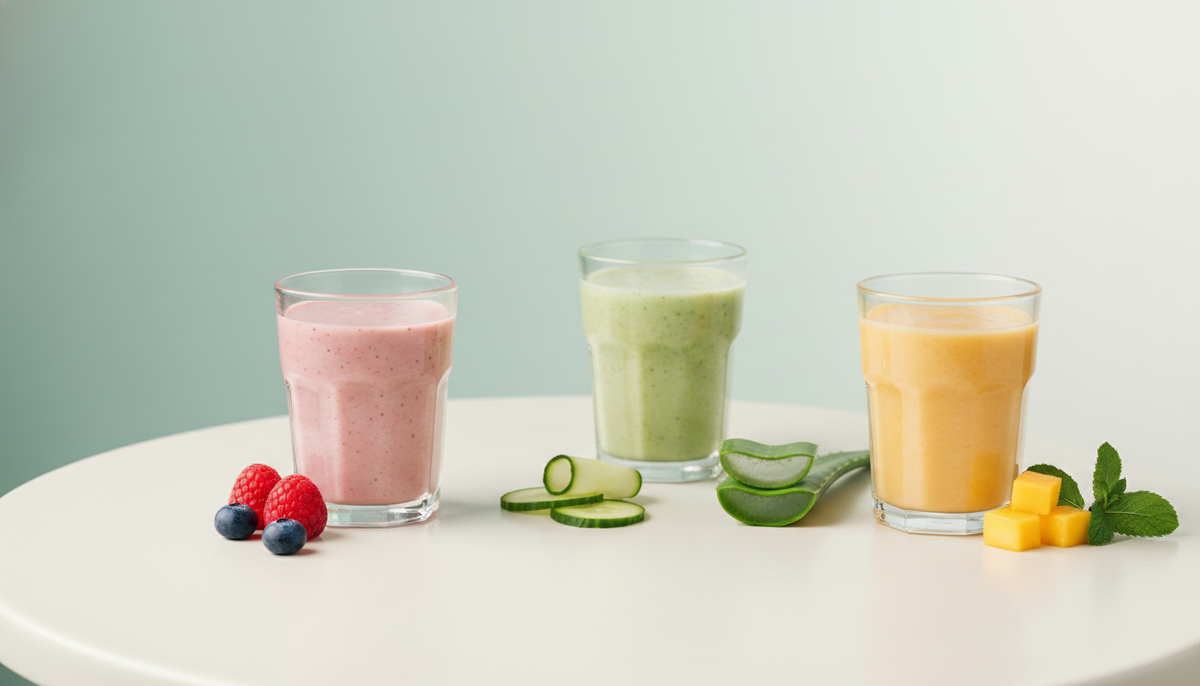
5 South African Aloe Juice Smoothie Recipes (Made for Local Fruit Seasons)
The fastest way to turn a daily wellness ritual into something you'll actually keep up is to make it taste good. A 60ml shot of aloe juice on its own is fine — it has a mild, faintly grassy taste — but a lot of people find it easier to integrate into the morning if it's the base of a proper breakfast smoothie.
South Africa has one of the best year-round fruit calendars in the world, and aloe juice pairs better with our local produce than most people expect. This post collects five recipes built around what's actually in season here — naartjies in July, mangoes in February, granadillas in autumn — including a rooibos blend for the colder months.
Each recipe is single-serve (350-400ml glass), takes under 4 minutes, and uses a 30-60ml pour of Curaloe Aloe Vera Juice 1L as the base. For the broader daily routine these recipes fit into, see our Daily Aloe Juice Ritual guide.
A few ground rules first
Before the recipes, four things worth knowing.
1. Don't blend aloe juice on high for long. The polysaccharide content that makes aloe juice nutritionally interesting can be fragmented by extended high-shear blending. Pulse the rest of the ingredients smooth first, then pour the aloe in for a short 5-10 second blend at low speed.
2. Cold is better than ice. A handful of ice waters down the smoothie. Better to keep your bananas peeled in the freezer and pull them straight from there — same chilling effect, no dilution.
3. Citrus + dairy is fine when it's quick. A few of these recipes mix citrus (granadilla, naartjie) with yoghurt. The curdling people worry about happens with slow heat or prolonged sitting. Blend, pour, drink — no issue.
4. The aloe pour matters. A typical comfortable daily pour is 30-60ml of juice. New to it? Start at 30ml and work up over a week. We dig into the why in our 30-day aloe juice routine post.
Now the recipes.
Recipe 1 — Summer Mango Sunrise
Best season: December–March (mango peak)
Vibe: Tropical, bright
Glass size: 400ml
Ingredients
- 1 ripe South African mango (Tommy or Kent), peeled and cubed (or 1 cup frozen mango)
- 1 small frozen banana
- ½ cup plain double-cream yoghurt (or coconut yoghurt if dairy-free)
- 60ml Curaloe Aloe Vera Juice
- 100ml cold filtered water
- Optional: a thumb of fresh ginger, peeled
Method
- Add the frozen banana, mango, yoghurt, water and ginger to the blender. Blend on medium until smooth (about 30 seconds).
- Add the aloe juice. Pulse on low for 5 seconds.
- Pour and serve immediately.
Why this one works
Mango is naturally pulpy enough to give the smoothie body without needing extra thickener. The yoghurt adds protein and slows down sugar absorption. The optional ginger lifts the flavour and pairs surprisingly well with aloe's faint grassiness.
Recipe 2 — Autumn Granadilla & Naartjie Glow
Best season: April–June (granadilla best in autumn; naartjies into winter)
Vibe: Sharp, citrussy, low-sugar
Glass size: 350ml
Ingredients
- Pulp from 2 ripe granadillas (passion fruit)
- 1 peeled naartjie (or 1 small orange), pith mostly removed
- ½ frozen banana
- 30-45ml Curaloe Aloe Vera Juice
- 150ml unsweetened almond milk (or oat milk)
- 1 teaspoon honey (optional)
Method
- Halve and scoop the granadilla pulp into the blender. Add the naartjie segments, frozen banana, almond milk, and honey if using.
- Blend on medium until the granadilla pips break down (about 40 seconds). If you prefer pip-free, strain through a fine mesh sieve and return to the blender.
- Add the aloe juice. Pulse on low for 5 seconds.
- Pour and serve.
Why this one works
Granadilla is the South African autumn ingredient nothing else replicates. Its tartness balances the natural sweetness of the naartjie, and the aloe juice doesn't get lost the way it can in heavier banana-only smoothies. The almond milk keeps it lighter than dairy.
Recipe 3 — Winter Rooibos & Honey Boost
Best season: May–September (winter morning ritual)
Vibe: Warming, comforting, slightly indulgent
Glass size: 350ml
Ingredients
- 200ml strong rooibos tea, brewed and cooled to room temperature
- 1 frozen banana
- 1 tablespoon raw South African honey (Eucalyptus, Fynbos, or Acacia)
- 1 tablespoon almond butter
- ½ teaspoon ground cinnamon
- 30-45ml Curaloe Aloe Vera Juice
- Optional: 1 medjool date, pitted
Method
- Brew the rooibos strong (2 bags in 200ml, steep 7 minutes) and let it cool to room temperature. Don't add hot tea to the blender — it'll cook the banana.
- Add the cooled rooibos, frozen banana, honey, almond butter, cinnamon and date (if using) to the blender. Blend on medium until smooth.
- Add the aloe juice. Pulse on low for 5 seconds.
- Pour and serve in a thick-walled glass to retain warmth — this is a smoothie that works best at fridge temperature, not iced.
Why this one works
Rooibos's mild earthy flavour pairs beautifully with aloe juice (both have grassy undertones that complement rather than clash). The honey and cinnamon make it feel like a treat. Almond butter adds enough protein and fat that this can stand in as a full breakfast.
Recipe 4 — Spring Marula & Berry Reset
Best season: September–November (using frozen marula pulp; fresh marula is in season Feb–April)
Vibe: Tart, antioxidant-rich, restorative
Glass size: 400ml
Ingredients
- ½ cup mixed berries (frozen blueberries + strawberries work well; locally-grown blackberries in spring)
- 2 tablespoons marula pulp (frozen, from specialist suppliers — or substitute granadilla pulp)
- 1 small frozen banana
- 60ml Curaloe Aloe Vera Juice
- 150ml coconut water (or filtered water + squeeze of lemon)
- Optional: 1 tablespoon chia seeds
Method
- Add the berries, marula pulp, banana, coconut water and chia (if using) to the blender. Blend on medium for 40 seconds until fully smooth.
- Add the aloe juice. Pulse on low for 5 seconds.
- Pour and serve. If you used chia, drink within 5 minutes before it thickens.
Why this one works
Marula pulp has a uniquely South African flavour — slightly creamy, tart, almost lychee-like — and is rich in vitamin C. The mixed berries reinforce the antioxidant profile. Coconut water provides electrolytes if you've come back from an early-morning run.
Recipe 5 — Year-Round Green Morning
Best season: All seasons — the workhorse recipe
Vibe: Light, slightly herbal, hydrating
Glass size: 400ml
Ingredients
- 1 small frozen banana
- 1 ripe pear (or 1 small green apple), cored and chopped
- 1 handful baby spinach (about 30g)
- 1 cm fresh ginger, peeled
- Juice of ½ lemon
- 200ml cold filtered water (or coconut water)
- 30-60ml Curaloe Aloe Vera Juice
- Optional: 1 tablespoon hemp seeds
Method
- Add the frozen banana, pear, spinach, ginger, lemon juice, water and hemp seeds (if using) to the blender. Blend on medium-high for 60 seconds until completely smooth (spinach needs the extra time to break down).
- Add the aloe juice. Pulse on low for 5 seconds.
- Pour and serve.
Why this one works
This is the recipe to default to when you can't get to the fruit shop. It uses pantry-staple ingredients, the spinach is unobtrusive in flavour, and the lemon-ginger combination keeps it lively. It's also the most forgiving recipe — you can swap the pear for almost any fruit, the spinach for cucumber, the lemon for lime, and it still works.
How these fit into a real morning
The five recipes cover the SA fruit calendar fairly comprehensively:
| Season | Recipe |
|---|---|
| Summer (Dec-Mar) | #1 Mango Sunrise |
| Autumn (Apr-Jun) | #2 Granadilla & Naartjie |
| Winter (Jun-Sep) | #3 Rooibos & Honey |
| Spring (Sep-Nov) | #4 Marula & Berry |
| Any time | #5 Green Morning |
If you rotate between three or four of these across a week, you'll naturally vary your nutrient intake without thinking about it. The aloe juice pour stays roughly constant (30-60ml), the fruit base shifts with what's seasonal and affordable.
For travel days, when a blender isn't practical, the 500ml travel size juice or the capsule format covers the same daily intake without needing a kitchen. We talk through the travel logistics in Travel-Friendly Aloe.
Common smoothie mistakes worth avoiding
Over-blending. The polysaccharide content in aloe juice doesn't enjoy 90 seconds in a Vitamix on high. Pulse it in last, briefly, on low speed.
Using fruit juice as the base. Pre-packaged fruit juices add a lot of fast sugar and dilute everything else. Water, plant milk, or coconut water are the better bases. Whole fruit (frozen or fresh) brings its own sugar at a manageable level.
Adding the aloe before the fruit is smooth. If the fruit isn't already broken down, the blender will keep running on high to deal with it — and the aloe gets fragmented along with the chunks.
Hot ingredients. Don't blend with anything above room temperature. Heat damages the aloe constituents (and the live cultures in yoghurt, if you're using it).
Drinking it 30 minutes later. Most of these recipes are at their best within 5 minutes. The chia in recipe #4 will thicken. The granadilla will separate. The spinach in recipe #5 will start to oxidise. Make it, drink it, get on with the morning.
FAQ
Can my kids drink these?
These recipes are intended for adults. Curaloe aloe products are not intended for children under 10; for older children, check with your healthcare provider first.
Can I make a batch for the week?
Smoothies are at their nutritional best fresh. If you must batch, freeze in portions and re-blend with the aloe juice added that morning (never freeze the aloe juice itself).
Why no spirulina / wheatgrass / supergreens powder?
These overpower aloe's mild flavour and add a strong taste profile that some people find difficult. If you want to add them, do it on alternate days from the aloe rather than combining them.
Can I use a hand blender?
Yes, but you'll need a tall narrow jug and you'll work harder for the texture. Best for the simpler recipes (#1, #3) and less suited to the spinach-heavy #5.
Is honey okay or should I use a sweetener?
Raw South African honey is the better choice nutritionally than refined sugar or artificial sweeteners. If you're avoiding sugar entirely, omit it — most of these recipes are sweet enough from the fruit alone.
More aloe juice recipes & guides
- Citrus-ginger morning aloe smoothie
- Substantial breakfast aloe smoothie
- Turmeric, aloe & pineapple smoothie
- Aloe juice for an active lifestyle
- Daily aloe vera juice routine
All recipes use our Aloe Vera Juice 1L or the 500ml size.
Note: Curaloe products are food supplements, not medicines. If you are pregnant, breastfeeding, on prescription medication, or have a chronic condition, please consult your healthcare provider before adding any supplement to your routine. Information in this post is educational and not medical advice.
Related: Why Curaloe grows Aloe vera (Aloe barbadensis Miller), not Aloe ferox →

Leave a comment
This site is protected by hCaptcha and the hCaptcha Privacy Policy and Terms of Service apply.