
Post-Sun Hydration: Aloe Juice After a Day at the Coast
A day on the SA coast — whether it's Camps Bay in January, Umhlanga in March, or Plett in December — is harder on your body than it usually feels at the time. Between the radiant sun load, the salt-water swimming, the wind, the alcohol that often comes with it, and the simple fact of being upright outdoors for eight hours, you can end the day mildly dehydrated and energetically flat without realising the cause.
This post is about how to recover from that day well. Aloe juice plays a role, but it's part of a bigger picture, not a magic fix. We'll talk about what's actually happening physiologically, what to drink (and in what order), how aloe juice fits in, and what the Curaloe Soothing Aloe Vera Gel handles separately on the skin side.
For the broader daily aloe ritual that this fits into, see our Daily Aloe Juice Routine guide.
What a SA beach day actually does to you
It helps to be specific about what you're recovering from. A typical 9am-to-5pm beach day in SA midsummer involves:
- 3-4 litres of sweat loss in active conditions (more if you swam and walked the beach)
- Sodium, potassium and magnesium depletion from the sweat
- 2-4 hours of cumulative direct sun exposure even if you reapplied SPF (and far more UV exposure than that, since UV penetrates light cloud and reflects off sand and water)
- Wind-driven epidermal moisture loss (the coastal breeze accelerates evaporation from skin and lips)
- Salt-water osmotic effect on skin and hair (pulls intracellular moisture outward)
- Often 1-3 alcoholic drinks, which compound dehydration via increased urine output and reduced ADH (the hormone that helps the kidneys retain water)
- Disrupted eating (you skip lunch or eat lighter than usual)
The cumulative effect by 6pm is: dehydrated, mineral-depleted, mildly sun-stressed, possibly sleep-disrupted from the early start. None of that is dramatic in itself — but it adds up to the "flattened" feeling people often have the morning after a great beach day.
What your body needs in order, post-sun
There's a sequence that works better than just chugging a glass of water on arrival home. The kidneys need to rehydrate but they also need the electrolyte context to do so without simply expelling the water through urine.
Phase 1 — Immediate (first 30 minutes home)
Goal: rehydrate intravascular volume
- 500ml-1L of plain cool water, sipped over 20-30 minutes (not chugged)
- If you've sweated heavily, add a pinch of salt + a squeeze of lemon, or a low-sugar electrolyte sachet
- Avoid: cold soft drinks (the sugar load slows gastric emptying and the carbonation doesn't help)
- Avoid: another alcoholic drink yet (compounds the deficit)
Phase 2 — Within 1 hour (shower and post-shower)
Goal: keep rehydrating
This is where aloe juice comes in. A 30-60ml pour of Curaloe Aloe Vera Juice at this point gives you a hydrating fluid base, the inner-leaf polysaccharide content of the juice, and small amounts of naturally-occurring minerals and amino acids — all in a low-sugar format.
A practical post-sun aloe drink:
- 30-60ml cold aloe juice
- 200ml cold water
- Juice of ½ lemon or lime
- Pinch of salt
- A few mint leaves (optional, for flavour)
- Ice if you want
Sip over 10-15 minutes. The combination is a pleasant, low-sugar way to rehydrate — unlike most commercial sports drinks, which are usually quite sugary.
Phase 3 — With dinner
Goal: restore glucose, protein, and salt; rebuild glycogen
A proper meal beats any supplement. Pair a real dinner with another 500ml of water (or rooibos tea, sparkling water with citrus, or aloe-water of the type above). Include some protein (you've been catabolising tissue subtly all day), some carbohydrate (replace glycogen), and salt (you're still in deficit).
Phase 4 — Before bed
Goal: avoid waking dehydrated; support overnight recovery
A final 200ml of water about an hour before bed (sooner if you want to avoid a night wake to urinate). If you didn't have your aloe juice earlier in the day, a 30ml pour in a small glass of water fits into your evening routine.
Where aloe juice fits and where it doesn't
Aloe juice is not a sports drink. It doesn't pretend to be one. What it brings to post-sun recovery is:
- A low-sugar hydrating liquid base that pairs well with electrolyte additions
- Inner-leaf polysaccharides that contribute to the overall hydration experience
- Small amounts of naturally-occurring vitamins, minerals and amino acids
- A taste profile that holds up to the citrus + salt + mint combination people actually drink in summer
It is not:
- A substitute for water as the main fluid
- A substitute for actual electrolyte replacement if you've sweated heavily
- A skincare product (that's what the aloe gel is for; the juice is for drinking)
- A "detox" of any kind (we don't make detox claims, and you should be sceptical of anyone who does)
Within those limits, it's a useful daily-use juice that happens to be especially welcome on a post-coast evening because it tastes good cold and pairs with all the right adjuncts (lemon, salt, mint, sparkling water).
What about your skin?
Skin recovery is a parallel track to the hydration recovery and needs different inputs. After a beach day, your skin is dealing with:
- Cumulative UV stress (visible or not)
- Wind-driven moisture loss
- Salt-water mineral residue
- Possible sand abrasion
A focused post-sun skincare sequence:
- Lukewarm shower (not hot — hot showers worsen flushed sun-stressed skin)
- Rinse the salt off properly, including hair and scalp
- Pat dry, don't rub
- Apply a generous layer of Curaloe Soothing Aloe Vera Gel to face, neck, shoulders, chest, and any other exposed areas while skin is still slightly damp
- Let it absorb for 5-10 minutes before adding anything else
- Optional: light moisturiser over the top for very dry or chapped areas
The aloe gel and the juice work on different axes — the gel addresses surface stress and moisture; the juice supports internal rehydration. They're complementary, not interchangeable.
For city-specific summer skincare adjustments, our Summer Skincare: Cape Town vs Joburg vs Durban post covers what your evening routine should look like depending on where you live.
A post-sun checklist
Save this for the evening of your next coast day:
- 500ml water in the first 30 minutes home
- Aloe + lemon + salt + water drink during shower-time
- Lukewarm shower; rinse all salt off
- Aloe gel applied generously to sun-exposed skin while still damp
- Proper dinner with protein, carbs, salt, and another 500ml fluid
- 200ml water about an hour before bed
- Sleep with the bedroom slightly cooler than usual (your body's still cooling down from the day's heat load)
Most people skip steps 2 and 4 and wonder why they're tired and tight the next morning. Adding those two steps consistently makes a real difference.
Things to skip after a beach day
- A second round of alcohol on top of the first (compounds the dehydration)
- A heavy fried takeaway (slows digestion when your body wants light absorbable food)
- Hot showers (worsen sun-flushed skin)
- Aggressive scrubs or exfoliators on sun-exposed skin (already stressed; you'll worsen it)
- Skipping dinner because you "snacked at the beach" (the snacks were probably mostly carbs; you need protein and salt)
For travellers and weekend coasters
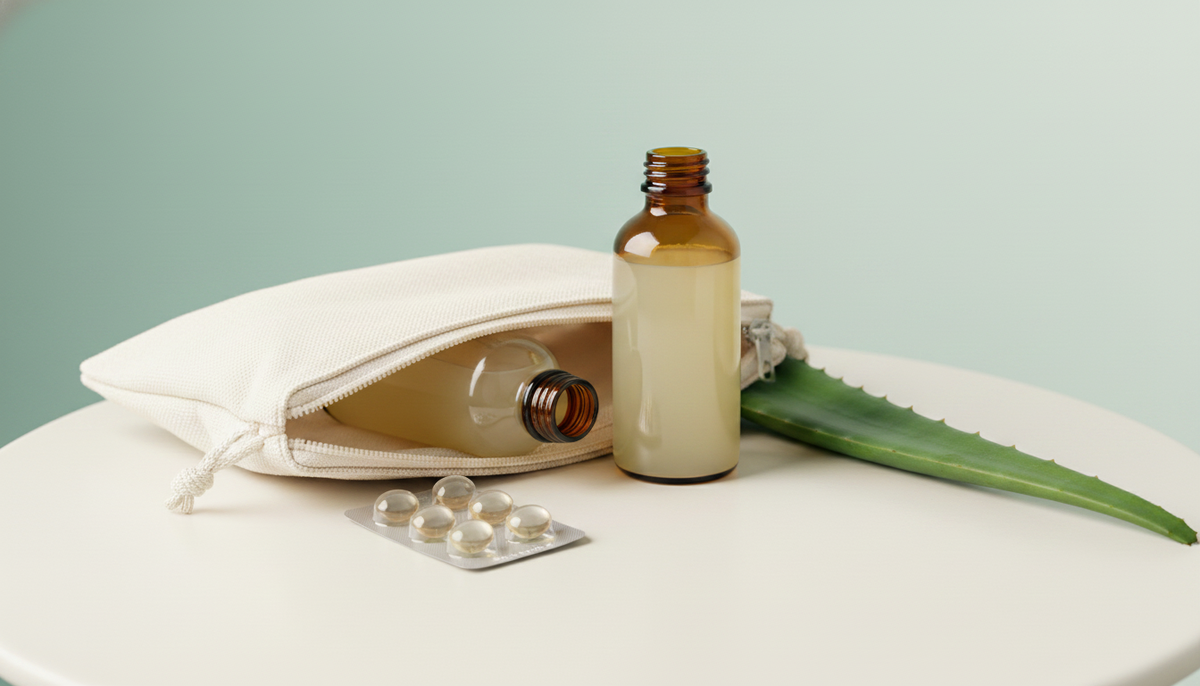
If you're not at home when this all happens — you're in an Airbnb or a B&B — packing a 500ml travel-size aloe juice covers the post-coast evening rehydration without needing to source it locally. We talk through the travel logistics in our travel-friendly aloe post.
For longer trips where weight matters, aloe vera capsules cover the same daily intake without the bottle.
FAQ
Can I drink aloe juice on the beach itself?
Yes — a thermos with cold aloe-water (60-80ml juice in 500ml cold water with a slice of lemon) is genuinely refreshing in the heat. But don't rely on it as your only fluid; pair it with plain water.
Will aloe juice help with sunburn pain?
The juice won't, directly. The topical aloe gel is the right tool for the surface side of mild sun-stressed skin. Severe sunburn (blistering, fever, chills) needs medical care, not a topical product.
How much aloe juice is too much in one day?
For most adults, the suggested serving is 30-60ml per day. Going above that is not recommended without specific guidance.
Are sports drinks better than this?
For acute heavy sweating during exercise, properly formulated electrolyte drinks have their place. For evening recovery from a leisure beach day, the citrus + salt + aloe + water combination is generally a better fit — less sugar, more useful additions.
Can children use this routine?
The water, rest and cool-shower parts of the routine, yes. The aloe juice itself is intended for adults: Curaloe aloe products are not intended for children under 10; for older children, check with your healthcare provider first.
Note: Curaloe products are food supplements and topical cosmetics, not medicines. If you are pregnant, breastfeeding, on prescription medication, or have a chronic condition, please consult your healthcare provider before adding any supplement to your routine. Information in this post is educational and not medical advice. Severe sunburn or heat illness requires medical attention.
Related: Why Curaloe grows Aloe vera (Aloe barbadensis Miller), not Aloe ferox →

Leave a comment
This site is protected by hCaptcha and the hCaptcha Privacy Policy and Terms of Service apply.