
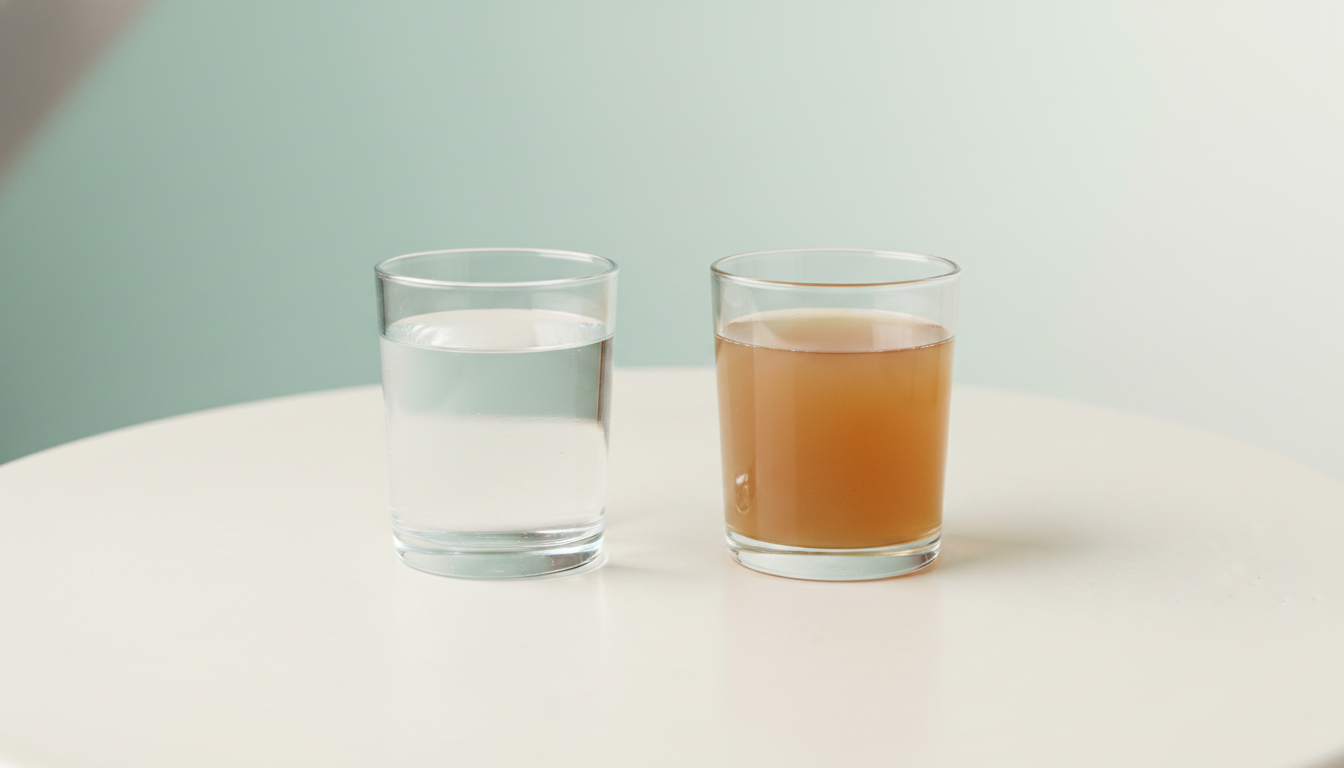
Decolourised vs Whole-Leaf Aloe Juice: What South Africans Need to Know
Walk down the supplement aisle at any South African pharmacy and you'll see "aloe vera juice" on three or four bottles that look nearly identical. The price will range from R39 to R299. The colour will range from pale-yellow tinged to crystal clear to murky brown. And almost none of the labels will explain why.
Two production decisions account for most of the difference: what part of the leaf goes into the bottle, and how the resulting liquid is processed before sealing. The shorthand the industry uses for these decisions is whole-leaf, inner-leaf, and decolourised.
This guide unpacks all three terms, explains why South African consumers should care, and shows what to look for on a label before paying for any aloe juice.
For the broader species-level comparison, our Aloe Barbadensis vs Aloe Ferox guide is the place to start.
The three layers of an aloe leaf
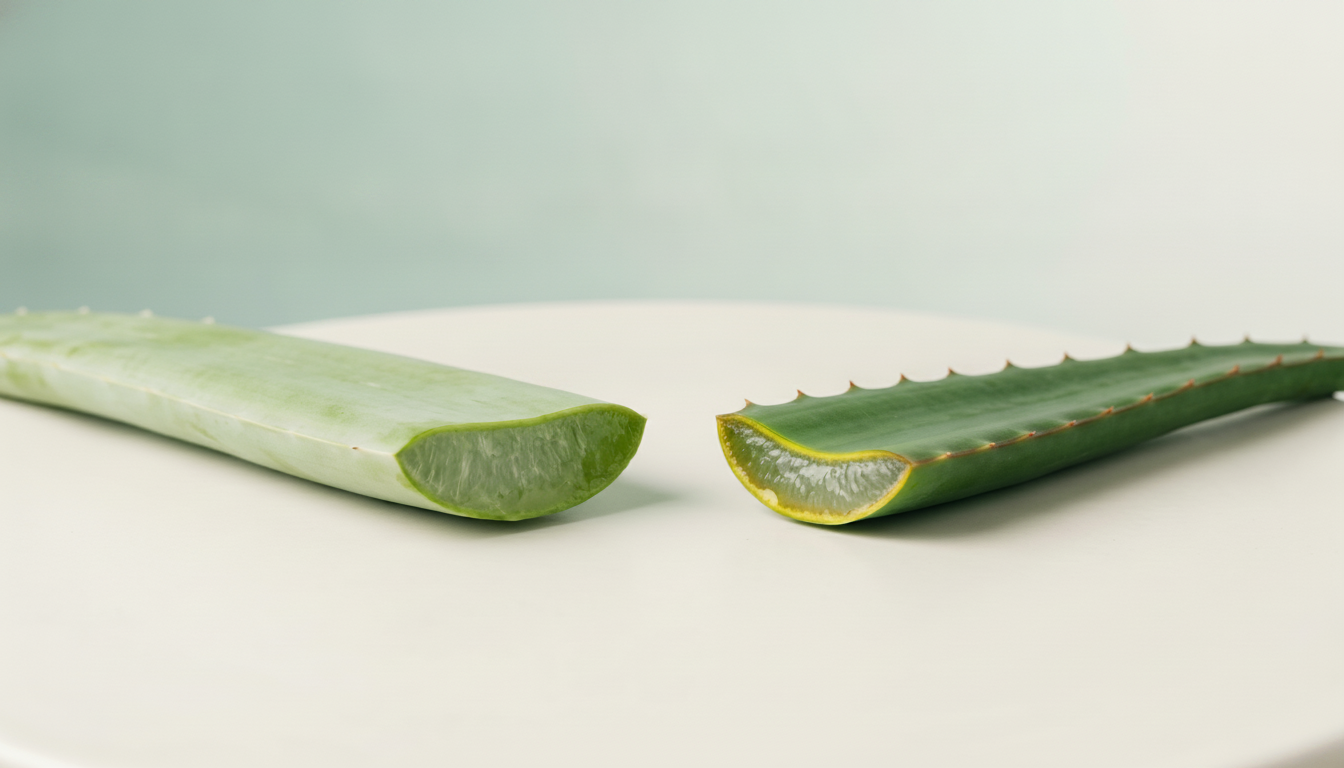
Cut an aloe leaf cleanly and you can see three distinct zones with the naked eye:
- Outer rind — green, fibrous, mostly cellulose. No meaningful nutritional content.
- Latex / aloin layer — a thin yellow band immediately under the rind. Contains anthraquinones, primarily aloin, plus aloe-emodin and barbaloin. These compounds are bitter, intensely yellow, and have a known laxative effect at higher doses.
- Inner leaf gel — the clear gel that takes up most of the leaf's interior. This is where the polysaccharides (including acemannan), most of the water, the trace minerals and the vitamins live.
Every processing decision in the aloe juice industry traces back to one question: how do you separate the inner gel from the latex layer, and what do you do with what's left?
What "whole-leaf" actually means
Whole-leaf processing is exactly what it sounds like: the entire leaf — rind, latex, and inner gel — is washed, then ground or pulped together. The resulting slurry contains everything: the cellulose, the aloin, the inner-gel polysaccharides, the water, the lot.
The reason producers choose whole-leaf is straightforward economics:
- Higher yield per leaf. You're using ~99% of the harvested material rather than the ~60-70% that inner-leaf processing typically recovers.
- Less labour. No filleting step. Whole leaves go straight from harvest into the mill.
- Easier scale. Automated processing of whole leaves is far cheaper than the hand or precision-machine work needed for inner-leaf separation.
The catch: that pulped slurry is loaded with aloin. South Africa's regulations, like those in the EU and US, cap aloin content in finished juice at 10 ppm (parts per million) for products intended for daily consumption. Aloin is a known irritant and laxative at higher concentrations, and chronic high-dose intake has been associated with adverse effects on the digestive tract.
So whole-leaf juice has to be filtered — usually through activated carbon — to bring the aloin below the regulatory limit. The filtration step is where things get interesting.
What "decolourised" means
Decolourised = the juice has been filtered to remove the yellow/brown colour and the aloin that causes it.
In practice, this happens through one of two routes:
Route A — Decolourise whole-leaf juice
The producer makes a whole-leaf slurry, then filters aggressively through activated carbon. The end product is clear or pale-yellow and meets the aloin limit. This is the cheapest path to a compliant clear juice.
The trade-off: activated-carbon filtration is non-selective. It strips aloin, but it also adsorbs a fraction of the long-chain polysaccharides (including acemannan), some of the vitamins, and some of the polyphenols. The more aggressive the filtration, the more is lost.
Route B — Decolourise inner-leaf juice
The producer fillets the leaf first, separating the inner gel from the latex-bearing rind. The inner-gel juice already has very little aloin in it — typically already well under the 10 ppm limit. A light decolourisation step can then be used to polish the colour and ensure regulatory safety.
Because the starting material is cleaner, the filtration can be far gentler. Less polysaccharide loss. More vitamins and minerals retained. Higher acemannan content in the final bottle.
The Curaloe juice is processed via Route B: inner-leaf-only material from cold-pressed Aloe barbadensis Miller, lightly decolourised. The end product is pale and clear, but the inner-gel constituents are largely intact.
Why this matters for the South African market
There's a regulatory wrinkle that's specific to South Africa and worth understanding.
South Africa is one of the world's major producers of Aloe ferox — the indigenous bitter aloe — which is exported (and sometimes sold domestically) as a traditional bitter-tasting laxative product. Aloe ferox is genuinely high in anthraquinones and is used precisely because of that aloin content.
This creates a labelling problem on the local shelf: a bottle saying "aloe vera juice" could be:
- *Decolourised inner-leaf Aloe barbadensis*** (clear, mild taste, polysaccharide-forward — this is what we sell)
- *Decolourised whole-leaf Aloe barbadensis*** (clear, mild, but lower polysaccharide content)
- *Diluted Aloe ferox*** marketed casually as "aloe vera" (bitter, laxative-leaning)
- Reconstituted aloe powder of unspecified species and origin
Three of those four products will taste, perform and price very differently — and yet the label might look almost identical.
We unpack the species question in more detail in our single-species label guide, and the molecular question in the acemannan explainer.
Reading a South African aloe juice label
Here's what to look for, in order of importance:
1. Species name
Look for Aloe barbadensis Miller (or Aloe vera (L.) Burm.f. — same plant, alternative nomenclature). If the label just says "aloe vera" without a Latin name, you don't know what's inside.
2. "Inner leaf" specified
If the label says "inner-leaf juice" or "inner-leaf gel-based", the producer is telling you they did the filleting step. If it just says "aloe vera juice" or "whole-leaf aloe vera juice", you're looking at the cheaper processing route.
3. "Decolourised" or "purified"
This is good news on a label, but only contextually. Decolourised inner-leaf juice is the cleanest possible product. Decolourised whole-leaf juice is acceptable but less concentrated. The word alone doesn't tell you which one — you need to read it next to the inner-leaf claim.
4. Cold-pressed
True cold-pressing requires the leaves to be processed close to harvest with minimal heat exposure. If the label says cold-pressed AND the producer is in a country that doesn't grow aloe (Northern Europe, most of Asia), they're almost certainly reconstituting from imported powder and the cold-pressing claim is meaningless.
Our juice is cold-pressed within hours of harvest at the ACAP plantation at Iphofolo Game Farm in Vivo, Limpopo Province — that geographic proximity is what makes the cold-pressing claim real.
5. Aloin content (if disclosed)
A handful of producers voluntarily disclose aloin content in ppm. Anything well below the 10 ppm regulatory limit is a sign the producer is confident in their processing.
6. Percentage of aloe
"99% Aloe Vera Juice" is better than "70% Aloe Vera Juice" all else equal — but two 99% juices can still have very different polysaccharide content depending on processing. Use percentage as a floor, not as proof of quality.
Comparison at a glance
| Feature | Whole-leaf decolourised | Inner-leaf decolourised |
|---|---|---|
| Material used | Entire leaf | Inner gel only |
| Aloin removal needed | Heavy filtration | Light polishing |
| Acemannan retained | Reduced | Mostly intact |
| Vitamins/minerals retained | Reduced | Mostly intact |
| Production cost | Lower | Higher |
| Typical taste | Neutral, slightly flat | Mild, faintly grassy |
| Typical colour | Clear to pale yellow | Pale, sometimes faintly green |
| Curaloe uses this | No | Yes — every bottle |
Why Curaloe chose inner-leaf decolourised
We could halve our cost per bottle by switching to whole-leaf processing tomorrow. We don't, because the entire reason a South African consumer would pay a premium for a single-species, cold-pressed aloe juice — instead of a cheaper supermarket product — is to actually receive the polysaccharide content that makes the juice nutritionally distinctive.
If we filtered that content away in pursuit of yield, we'd be selling expensive water with a label on it. Our 1L Health Boost juice and our 500ml Wellness Boost are both inner-leaf decolourised because that's the only path consistent with the brand we've built.
For people who want the same approach in a concentrated daily-use form, our Aloe Vera Capsules use the same inner-leaf material in a freeze-dried format.
FAQ
Is whole-leaf aloe juice unsafe?
Not when properly processed to meet the 10 ppm aloin regulatory limit. The issue isn't safety — it's nutritional concentration. Whole-leaf juice is generally lower in the polysaccharides that make aloe juice distinctive.
Why is decolourised aloe juice clear, not green?
Because the chlorophyll-bearing rind and the yellow latex layer have been removed or filtered out. Pure inner-leaf gel is naturally pale, not bright green. Bright-green bottled "aloe juice" usually means added colourant.
Does decolourised juice still contain acemannan?
Yes, when the decolourisation is done lightly on already-clean inner-leaf material. When decolourisation is used as a heavy aloin-removal step on whole-leaf material, acemannan is partially lost.
Is "aloin-free" the same as decolourised?
"Aloin-free" is a marketing claim that usually means below detection threshold — typically <0.1 ppm. Decolourised usually means below the 10 ppm regulatory limit. Aloin-free is a stricter claim, but neither tells you about polysaccharide content.
How can I tell if a juice is reconstituted from powder?
Look at country of origin vs country of manufacture. If aloe is grown in South Africa, Mexico, the US, or India, and the juice is "manufactured" in the Netherlands, UK, or China, it's almost certainly reconstituted. True cold-pressed juice is processed near the farm.
Note: Curaloe products are food supplements, not medicines. If you are pregnant, breastfeeding, on prescription medication, or have a chronic condition, please consult your healthcare provider before adding any supplement to your routine. Information in this post is educational and not medical advice.
Related: Why Curaloe grows Aloe vera (Aloe barbadensis Miller), not Aloe ferox →

Leave a comment
This site is protected by hCaptcha and the hCaptcha Privacy Policy and Terms of Service apply.