
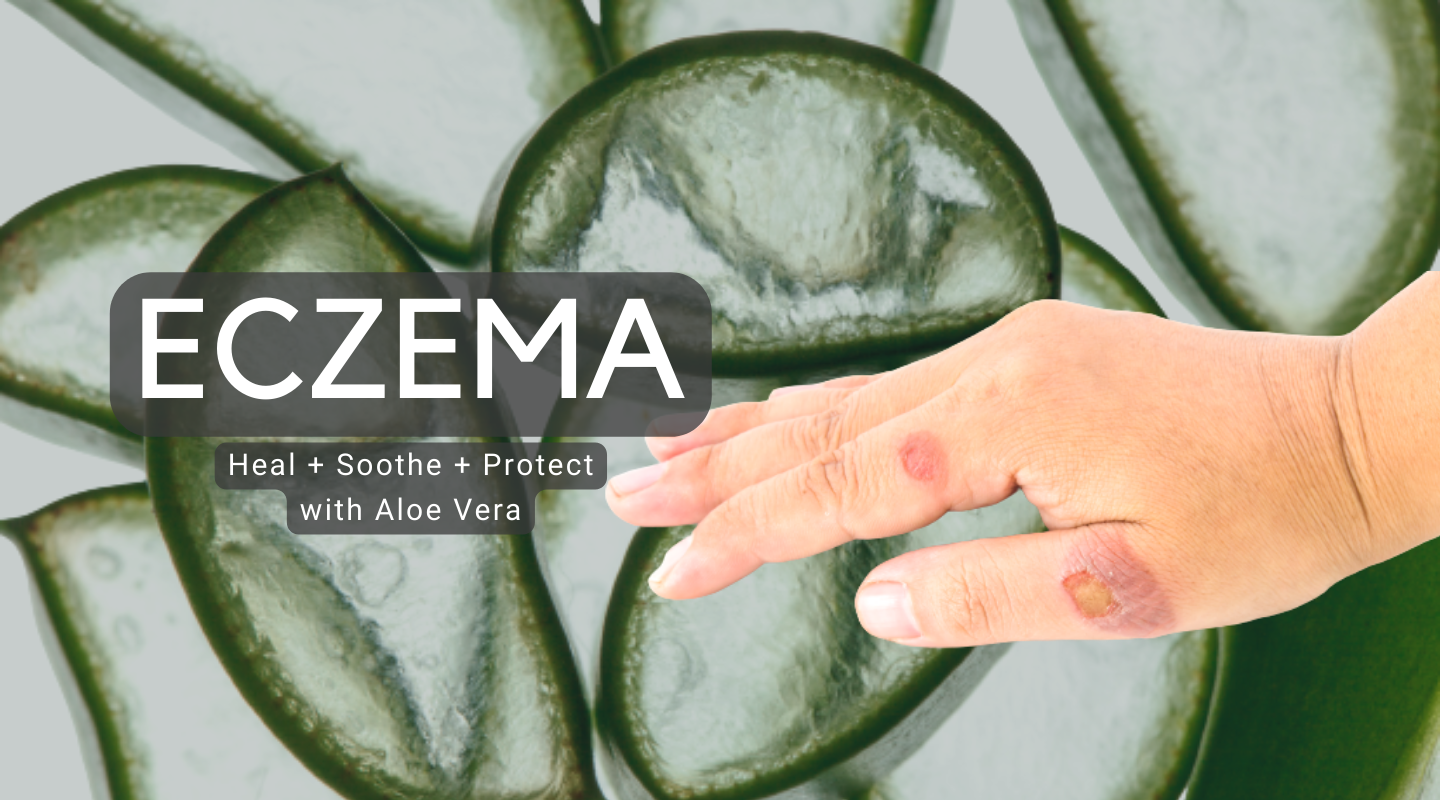
Gentle Aloe Skincare for Sensitive, Dry, or Reactive Skin (Cosmetic Approach)
If your skin reacts to almost everything — new products, weather changes, harsh cleansers, even some "gentle" formulations — building a sustainable routine feels like a minefield. Add the constant pressure to "do more" (more steps, more actives, more results), and many sensitive-skin users end up worse off than when they started.
This post takes the opposite approach. It's about a deliberately minimal, barrier-friendly routine built around the single most-tolerated cosmetic ingredient in the category: inner-leaf aloe vera gel. It's strictly cosmetic — we're not discussing treatment for eczema, dermatitis, rosacea, psoriasis, or any other diagnosed skin condition. If you have a medical skin diagnosis, this post is not for you; you need a dermatologist.
What this post can do: help anyone with reactive, dry, or low-tolerance skin build a simple cosmetic routine that doesn't make things worse and gives the skin a calmer baseline.
For the broader cluster framework, see our Skincare for South African Climates pillar. For proper introduction protocol, our patch-test guide is essential reading before trying anything new.
What "sensitive skin" actually means (and doesn't)
The term gets used loosely. For this post, "sensitive, dry, or reactive skin" refers to non-medical skin that:
- Reacts to typical cosmetic ingredients (stinging, redness, tightness) more than the average person's skin
- Has a compromised or chronically thin barrier (water loses through it faster, irritants penetrate it easier)
- Flares with environmental triggers (cold, wind, low humidity, sun, heat)
- Has been over-treated in the past (too many actives, too aggressive cleansing) and hasn't fully recovered
- Is currently calm but becomes reactive easily if pushed
What "sensitive skin" is not, for the purposes of this post:
- Eczema (atopic dermatitis) — a diagnosed condition needing medical management
- Rosacea — a diagnosed condition with specific medical treatment options
- Allergic contact dermatitis — needs identification of the allergen
- Active inflammatory skin conditions of any kind
The cosmetic routine below supports the first category. The second category needs a dermatologist, not a blog post.
Five principles for a low-reaction routine
1. Fewer steps, gentler ingredients
The more products you put on reactive skin, the more chances for a reaction. A minimal routine (3-4 steps) is almost always better tolerated than a 7-step one. The fewer ingredients per product, the easier to identify the trigger if a reaction does happen.
2. Build slowly, change one variable at a time
If you're rebuilding a routine after reactions, change one product at a time and wait at least 14 days before adding the next. This is the same logic as elimination diets — you can't identify the trigger if you change everything at once.
3. No active ingredients until the barrier is calm
Retinol, AHA/BHA acids, vitamin C — these all have a place, but not on currently-reactive skin. Stop them entirely for 4-6 weeks while you rebuild barrier function, then reintroduce one at a time, very low frequency, with careful watching.
4. Fragrance-free, essential-oil-free, alcohol-free
Three of the most common cosmetic reaction triggers. Eliminate all three from your routine while rebuilding. Note: "unscented" is not the same as "fragrance-free" — see our skincare label terms guide for the distinction.
5. Patient consistency over dramatic intervention
Reactive skin doesn't "heal" in 3 days. The minimum useful timeframe is 4-6 weeks of consistent gentle routine before assessing whether it's working. Most people quit at week 2 because they don't see dramatic change — and dramatic change isn't the goal. Stable, calm, predictable skin is the goal.
Where aloe gel fits
Curaloe Soothing Aloe Vera Gel is consistently one of the best-tolerated single ingredients for reactive skin because:
- Short ingredient list. Single primary ingredient with minimal preservation system. Fewer ingredients = fewer potential reaction triggers.
- Lightweight, non-occlusive texture. Doesn't trap heat or moisture against compromised skin the way heavy creams can.
- No fragrance, essential oils, alcohol, parabens, or sulphates. None of the common reaction triggers.
- Acts as a hydration layer without adding active ingredients. It supports the barrier without pushing it.
- Layers cleanly with other gentle products. Doesn't interfere with the rest of the minimal routine.
What it isn't, for sensitive skin:
- A treatment for any specific condition
- A miracle calming agent (skin that's actively flaring needs time and gentleness, not a single product)
- Compatible with everyone — true aloe allergy exists in a small percentage of people, which is why patch testing always matters
A 4-step routine for sensitive, dry, or reactive skin
Morning
- Rinse with cool or lukewarm water (no cleanser at all if your skin is currently flaring; skin doesn't get "dirty" overnight)
- Layer of Curaloe Aloe Vera Gel on damp skin
- Lightweight fragrance-free moisturiser (ceramide-based or simple emollient — patch test first)
- Broad-spectrum mineral sunscreen (zinc oxide or titanium dioxide — chemical sunscreens often trigger sensitive skin)
That's it. Four steps. Under 3 minutes.
Evening
- Gentle non-foaming cream cleanser with lukewarm water (only if you wore makeup or SPF; otherwise water rinse is enough)
- Pat dry — never rub
- Layer of Curaloe Aloe Vera Gel on damp skin
- Same moisturiser as morning — no separate night cream initially; once the skin is calm for 2-3 weeks you can add a slightly richer night cream if needed
Once you're calm and stable for 4-6 weeks
Only then consider adding:
- A vitamin C serum at the lowest concentration (5-10%), 2-3 mornings a week
- A retinaldehyde (gentler than retinol) twice a week, evening only
- Mandelic acid (mildest AHA) once a week if you want exfoliation
Add one at a time, with at least 3 weeks between additions, and patch test each.
What to skip entirely while rebuilding
For 6-8 weeks of barrier rebuilding:
- All foaming cleansers (sulphates strip the barrier further)
- Alcohol toners of any kind
- Physical scrubs and brushes
- AHA/BHA leave-on acids
- Retinol, tretinoin at any concentration
- Benzoyl peroxide
- Fragranced products — face, body, hair (yes, your shampoo can affect facial skin through runoff)
- Essential oils on the face — even "gentle" ones like rosehip or lavender are common sensitisers
- Sheet masks daily (the substrate can trigger reactions; the ingredient cocktail is unpredictable)
- Hot water on the face — switch to lukewarm only
Environmental adjustments
The routine matters, but so does the environment:
- Humidifier in dry rooms (especially in air-conditioned offices and winter bedrooms)
- Avoid hot showers that fog the bathroom mirror — that level of heat strips the skin barrier
- Wash pillowcases with fragrance-free detergent twice a week
- Mineral sunscreen reapplied properly in SA's high-UV environment (UV exposure itself can trigger reactive episodes)
- Cool compress at the first sign of flare — a clean cloth dampened with cold water, 5-10 minutes — buys you time before deciding what to do
When to involve a dermatologist
This post is for cosmetic skincare. See a dermatologist for:
- Any reaction that doesn't resolve within 7 days of stopping new products
- Persistent redness, scaling, or itching of unknown cause
- Skin that's getting worse despite a gentle routine
- Family history of atopic dermatitis with skin symptoms
- Anything that affects your sleep or daily function
- Suspected allergy that you can't identify
- Mental-health impact from skin issues
The cosmetic routine in this post supports already-calm or recovering skin. It doesn't replace medical care when something else is going on.
For environmental-skincare adjustments specific to SA cities, see our Summer Skincare CPT/JHB/DBN guide. For the broader principles, the Skincare pillar.
FAQ
Is aloe gel safe for very sensitive skin?
Generally yes — inner-leaf aloe gel is one of the best-tolerated cosmetic single ingredients. But true aloe allergy exists in a small percentage of users. Always patch test first, especially if your skin reacts often.
Can I use this routine if I have eczema?
We don't make eczema claims. If you have diagnosed eczema, please follow your dermatologist's protocol — it may include this kind of minimal routine, or it may include medicated topicals we don't and can't recommend. Consult your dermatologist before adopting any new routine.
Should I skip cleanser entirely?
Many sensitive-skin specialists suggest water-only morning cleansing for currently-flaring skin. Evening cleansing is still useful if you wore SPF, makeup, or have been in heavily polluted air.
Why fragrance-free, not just "natural"?
"Natural" essential oils are some of the most common reaction triggers. Lavender, citrus, tea tree, rose — all plant-derived, all frequently sensitising. Fragrance-free is the safer specification.
How long until my skin calms?
Anywhere from 2 weeks (mild reactivity) to 3-6 months (deeply compromised barrier from years of harsh products). Consistency matters more than dramatic intervention.
Note: Curaloe products are topical cosmetics, not medicines. If you have a diagnosed skin condition or are using prescription topicals, please consult your dermatologist before changing your routine. Information in this post is educational and not medical advice.
Related reading
- The SA-Climate Skincare Hub — the broader topic guide.
- How to patch-test a new skincare product
- Skincare for South African climates
Related: Why Curaloe grows Aloe vera (Aloe barbadensis Miller), not Aloe ferox →


Leave a comment
This site is protected by hCaptcha and the hCaptcha Privacy Policy and Terms of Service apply.