
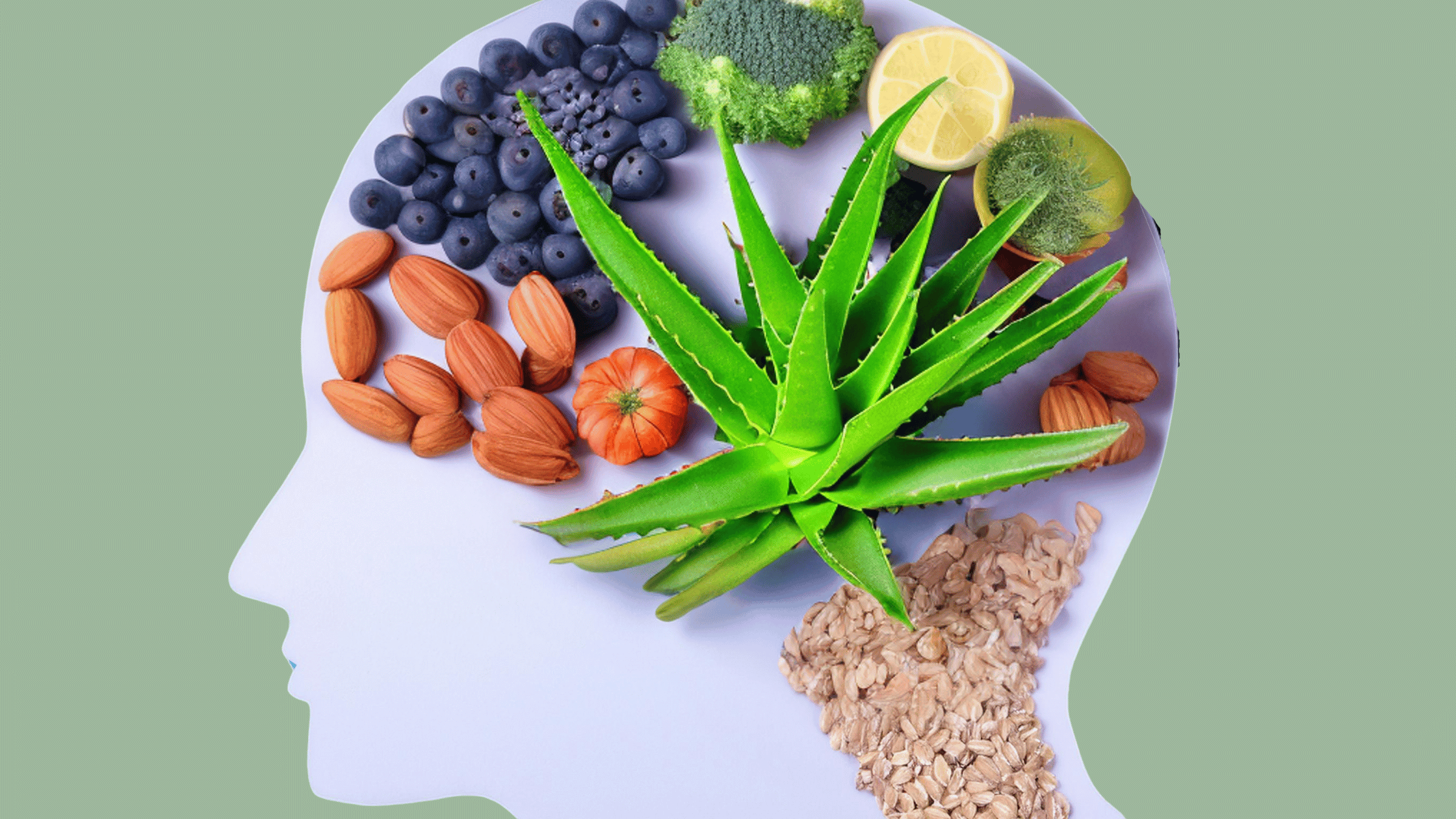
What the Research Says About Aloe Polysaccharides (A Factual Overview)
There's a wide gap between what aloe vera polysaccharides are studied for and what consumer marketing typically claims they do. Genuine published research on these compounds is mostly preclinical (test tube and animal studies), with some early-stage human trials, focused on specific narrow questions. Consumer marketing tends to leap from "this compound has been studied" to "this product cures/treats/boosts X" — which is not what the research actually shows.
This post is a sober look at what's been studied, what the studies found, and what the limitations are. It's not a treatment guide. It's not a list of "benefits." It's the kind of summary a curious reader can use to understand the actual state of the research without overpromising or underpromising what's in a glass of Curaloe aloe juice.
For the molecular basics, see our acemannan post. For the broader Aloe Barbadensis context, the guide to Aloe barbadensis vs Aloe ferox is the place to start.
What aloe polysaccharides are, briefly
Aloe barbadensis Miller inner leaf gel contains several polysaccharide types. The most studied is acemannan — a β-(1,4)-linked acetylated mannan polysaccharide. There are also smaller amounts of glucomannans, galactomannans, and other related sugar polymers.
Polysaccharides are long molecules made of repeating sugar (monosaccharide) units. The structure matters: long intact chains behave differently from fragmented short ones. Processing decisions in commercial aloe production (heat exposure, filtration, drying) heavily influence whether the polysaccharides remain intact through to the bottle. We unpack this in our cold-pressed vs reconstituted post.
The state of the research
Published research on aloe polysaccharides falls into several categories. We'll work through each.
1. In vitro studies (test tube / cell culture)
These are the most common. Researchers expose isolated cells or biological tissue to purified aloe polysaccharide extracts and observe what happens. There's a body of in vitro research looking at how acemannan and related compounds interact with various cell types.
What in vitro studies can tell us: Whether a compound has biological activity at certain concentrations in a controlled lab setting. They establish biological plausibility.
What in vitro studies cannot tell us: Whether the same effects happen when you drink the juice. The gap between "this molecule does X to cells in a dish" and "this juice does X in your body" is enormous. Most in vitro effects do not translate to clinical outcomes.
Honest summary: There's plenty of in vitro literature on aloe polysaccharides. The findings are interesting at a basic-science level. They do not justify consumer-product claims about specific health outcomes.
2. Animal studies
A smaller body of research uses rodent (mouse, rat) or other animal models to look at effects of aloe extracts or purified polysaccharides on various physiological measures.
What animal studies can tell us: Whether effects observed in vitro translate to a whole-organism context, and provide an early signal for what to study in humans.
What animal studies cannot tell us: Whether the same effects occur in humans. Mice and humans differ significantly in metabolism, immune function, gut microbiome, and many other relevant systems. A surprising fraction of effects observed in mice do not replicate in human trials.
Honest summary: Animal data on aloe polysaccharides exists across several research areas. As with in vitro data, the findings are scientifically interesting but they don't establish anything you can claim on a consumer label.
3. Human clinical trials
This is where the evidence base gets thinner. There are some early-stage human trials on specific aloe preparations for specific narrow uses, but the body of well-designed, large, placebo-controlled human trials is small relative to the volume of marketing claims made about aloe.
What well-designed human trials can tell us: Whether a specific preparation, at a specific dose, in a specific population, with specific endpoints, produces a measurable effect compared to placebo.
Limitations of current human trial evidence: Most published trials are small (often under 100 participants), short-duration (weeks to a few months), and use preparations that may differ significantly from commercial aloe juice products. The "aloe extract" used in a clinical trial may not be the same as the cold-pressed inner-leaf juice you'd buy on a shelf.
Honest summary: The human clinical evidence for aloe is suggestive in some narrow areas, inconclusive in many others, and inadequate to support most of the broad claims made in consumer marketing.
What the research does NOT establish
Some specific things that aloe juice marketing has claimed over the years but that the published evidence does not support at the level required for consumer claims:
- ❌ Curing or treating diseases (no high-quality clinical evidence)
- ❌ "Boosting immunity" in a meaningful clinical sense
- ❌ Detoxifying the body
- ❌ Balancing hormones
- ❌ Improving cognitive function
- ❌ Reducing inflammation systemically
- ❌ Weight loss
- ❌ Improving fertility
- ❌ Curing skin conditions
We don't make any of these claims about our products. The published research isn't there to support them. Anyone making these claims about an aloe product — ours or anyone else's — is overstating what the evidence shows.
What's reasonable to say
What you can reasonably say about inner-leaf aloe juice based on the broader literature:
✅ It contains polysaccharides (including acemannan) at meaningful concentrations when properly produced
✅ It contains naturally-occurring vitamins, minerals, amino acids, and enzymes in small quantities
✅ It has a long traditional use in many cultures as part of daily routines
✅ It contributes hydration in a low-sugar format
✅ It's been part of human food and traditional use for thousands of years
That's the honest list. It's not dramatic, but it's accurate.
For the practical daily-use side of this, see our Daily Aloe Juice Routine guide and 30-day routine guide.
Why marketing leaps beyond the evidence
A pattern worth understanding: a 2010 mouse study finding that a specific aloe extract had some effect on a specific tissue gets translated, over years of marketing copy iterations, into "scientists have proven aloe vera [does dramatic claim]." Each step in the translation chain loses precision and adds confidence the original research never had.
By the time you read "scientifically proven benefits" on a consumer label, the actual link to original research is often:
- An in vitro study from 2008 with a different aloe preparation
- At a different concentration than you'd get from drinking juice
- Looking at a different endpoint than the consumer claim implies
- With limitations the marketing copy ignores
This is one reason we keep saying that "backed by research" is a much weaker claim than it sounds. Real research-backed claims are narrow, specific, and rare. Most "research-backed" supplement marketing is built on overinterpretation of preliminary studies.
What good research on aloe would look like in the future
For the research base to actually support stronger consumer claims, we'd want to see:
- Large (multi-hundred or thousand-participant) randomised placebo-controlled trials
- Using commercially-available aloe preparations (not just lab-purified extracts)
- Over long durations (months to years)
- With clinically meaningful endpoints (not surrogate biomarkers)
- Replicated across multiple independent research groups
- Published in peer-reviewed journals with full data disclosure
This kind of evidence base exists for some pharmaceuticals and a small number of nutritional interventions (e.g., specific vitamins for specific deficiency conditions). It doesn't exist for aloe vera juice broadly. Until it does, the appropriate framing for aloe juice is as a traditional daily-use food, not as a therapeutic product.
What we actually know about our product specifically
We can say this about Curaloe juice with confidence:
- Species: Single-species, certified-organic Aloe vera (Aloe barbadensis Miller)
- Plant part: Inner-leaf only
- Processing: Processed within a few hours of cutting at the ACAP plantation, Vivo, Limpopo, South Africa
- Decolourisation: Light, preserving polysaccharide content
- Aloin: Reduced by decolourisation
- No added sugars, flavours, or dyes
- Preservative: citric acid (~0.3%) for shelf stability
What's in the bottle is verifiable and traceable. What it does in your body — beyond contributing to a balanced lifestyle as part of a daily routine — is not something we'll oversell.
How to read aloe research yourself
If you want to engage with the actual literature:
- PubMed (free) has most peer-reviewed biomedical research. Search "acemannan" or "Aloe vera polysaccharide" for the relevant literature.
- Be cautious of journal quality. Predatory journals publish unreviewed work. Check whether the journal is indexed and whether the publisher is reputable.
- Read past the abstract. Methodology sections reveal sample sizes, preparation details, and limitations the abstract often omits.
- Note funding sources. Industry-funded studies aren't automatically biased, but disclosure is important context.
- Look for systematic reviews and meta-analyses rather than relying on single studies. A 2020 systematic review tells you more than a single 2015 trial.
This is a more time-consuming but more honest way to know what the evidence actually says.
FAQ
Are aloe polysaccharides "scientifically proven" to do anything?
Aloe polysaccharides have been shown in laboratory and animal settings to have various biological activities. Whether those activities translate to specific health outcomes in humans drinking commercial aloe juice is largely an open question. "Scientifically proven" is a marketing phrase, not a fair description of the evidence base.
Why don't you make stronger claims about your product?
Because the research and the regulatory framework don't support stronger claims. We'd rather be honest about what aloe juice plausibly contributes and let our product speak for itself than make claims that would be misleading.
Does this mean aloe juice doesn't work?
"Work" depends on what you're measuring. As part of a balanced daily lifestyle, a consistent inner-leaf aloe juice routine is plausibly contributing to overall daily fluid and nutrient intake. As a treatment for any specific condition, no — that's not what it's for.
What about all the benefits I've read about online?
A lot of consumer-facing aloe content overstates what the underlying research shows. Be sceptical of any source making dramatic claims. The pattern of "ancient remedy + modern science = miracle cure" is almost always overinterpretation.
Should I keep drinking aloe juice if it doesn't have proven benefits?
That's up to you. Many people drink coffee, tea, and other traditional daily beverages without expecting them to "cure" anything — they're part of a normal daily life. Aloe juice fits in the same category. If the routine works for you, keep it. If not, don't.
Note: Curaloe products are food supplements, not medicines. If you are pregnant, breastfeeding, on prescription medication, or have a chronic condition, please consult your healthcare provider before adding any supplement to your routine. Information in this post is educational and not medical advice.
Related reading
- Our aloe vera science guide
- Acemannan: the key compound in quality aloe juice
- Aloe barbadensis vs Aloe ferox: the science
- Cold-pressed vs reconstituted aloe juice
Related: Why Curaloe grows Aloe vera (Aloe barbadensis Miller), not Aloe ferox →

Leave a comment
This site is protected by hCaptcha and the hCaptcha Privacy Policy and Terms of Service apply.